Monday, March 31, 2026

Artwork of the Day
Where golden rings meet indigo tides,
the water holds its breath and multiplies —
each ripple learning from the last to sing,
until the silence hums with everything,
and stillness finds the frequency it hides.
Faces of Grit

Tegla Loroupe
The barefoot girl who outran the world
Claude Code cache bugs silently inflate API costs by 10-20x
A developer reverse-engineered the Claude Code standalone binary using Ghidra and a MITM proxy, uncovering two independent bugs that break prompt caching. The first involves a native-layer string replacement in Anthropic's custom Bun fork that corrupts cache keys when conversations discuss billing internals. The second is a separate cache invalidation issue. Together, they can silently multiply API costs by 10-20x. The post quickly became the day's most upvoted thread, with users reporting that the bugs explain mysterious usage spikes they had attributed to their own workflows. Anthropic has acknowledged the issue.
Anthropic officially investigating Claude Code usage limits hitting faster than expected
In an official post from ClaudeOfficial, Anthropic acknowledged that users are burning through Claude Code session limits far faster than intended and stated the issue is the team's top priority. The response drew sharp criticism — the top comment with 302 upvotes demanded email communication for critical changes instead of Reddit posts. Another highly upvoted reply accused Anthropic of weeks of silence followed by hollow acknowledgments, calling the messaging dishonest. The thread captured widespread frustration among paying subscribers who feel the product's reliability has degraded significantly.
Fedware: Government apps that spy harder than the apps they ban
A deep investigation found that several official U.S. government mobile apps contain surveillance components comparable to or exceeding the spyware in apps from adversarial nations. The White House app was found to include Huawei-linked tracking code and an ICE tip line. The piece drew nearly 500 upvotes on Hacker News and sparked a heated debate about the irony of banning foreign apps on national security grounds while deploying domestic equivalents. The story highlights a growing tension between government tech policy rhetoric and actual implementation.
Meta starts testing a premium subscription on Instagram
Meta has begun testing a paid subscription tier on Instagram that includes features like viewing Stories anonymously and seeing rewatch counts on your own Stories. The move comes as organic reach on the platform continues to decline and Instagram engagement drops across the board — a trend that dominated today's digital marketing discussions as well. The subscription model follows a broader industry pattern where platforms that once grew on free access now charge for features that were previously default behaviors or previously nonexistent.
Every capability a human employee takes for granted is being rebuilt as an API
A comprehensive mapping of the emerging agent infrastructure stack identified over a dozen companies building primitives specifically for AI agents rather than humans — email accounts, phone numbers, wallets, browsers, payment rails, and persistent memory. The top-voted comment noted that the real bottleneck is not the primitives themselves but orchestration: error handling, failover logic, and reliability at scale. From an investor perspective, most primitive companies will likely get consolidated because the real moat lies in making the whole stack work reliably 99% of the time without human babysitting.
OpenAI's Sora burned a million dollars a day while losing half its users
According to the Wall Street Journal, OpenAI's Sora video generation app cost roughly one million dollars per day to operate while its user base collapsed from one million to roughly 500,000 shortly after launch and never recovered. Copyright issues, brand damage from low-quality viral content, and mounting competitive pressure from Anthropic forced a strategic pivot. OpenAI canceled training runs for new video models entirely and redirected compute toward coding, enterprise, and agent-based products. The Sora app shuts down in April, with the API following in September. The team will pivot to world models for robotics.
How to turn anything into a router
The most upvoted Hacker News post of the day with over 600 points, this guide walks through the process of converting arbitrary hardware into a functioning network router. The post covers everything from basic packet forwarding to NAT, firewall rules, and DHCP configuration, using only standard Linux tools. Over 200 comments shared war stories of creative routing solutions, from Raspberry Pis to old Android phones. A practical and educational piece that resonated with the HN audience's love for infrastructure tinkering.
There are more AI health tools than ever — but how well do they work?
Microsoft, Amazon, and OpenAI have all launched consumer health AI tools in recent months, driven partly by the fact that Microsoft alone fields 50 million health-related questions daily. But all six academic researchers interviewed for this piece raised concerns that products are shipping before independent safety evaluation. Even well-designed benchmarks have blind spots — real users lacking medical expertise may not know how to get useful answers from health chatbots, a gap lab tests miss. The honest assessment is that without trusted third-party evaluation, it remains genuinely unclear whether today's health AI tools help more than they harm. A sobering counterweight to the consumer AI health boom.
Why local models still break with coding agents — Georgi Gerganov explains
Simon Willison highlighted a quote from Georgi Gerganov, the creator of llama.cpp, explaining why local LLMs consistently underperform with coding agents. The core issue is not model quality but the fragile chain of components between user input and model output — chat templates, prompt construction, and even pure inference bugs developed by different parties. Gerganov argues that what users observe with local models is 'with very high probability still broken in some subtle way' along that chain. The insight reframes the local-vs-cloud debate from model intelligence to infrastructure reliability. Willison also released new versions of datasette-files and datasette-llm, adding cross-plugin file access APIs and purpose-specific LLM configuration.
Optimizing for total human flourishing across geological time
The top philosophy post of the day argued that the most rational civilizational goal would be to optimize for total human flourishing measured across geological timescales rather than quarterly cycles or electoral terms. The thesis generated sharp pushback in the comments — the most upvoted response simply asked 'Good luck measuring that,' while another commenter joked about consulting their 'flourishometer' reading of '14 microgrins.' The skepticism centered on the gap between an appealing-sounding abstract principle and any practical framework for implementing it. A reminder that grand utilitarian visions need concrete mechanisms to move beyond aspiration.
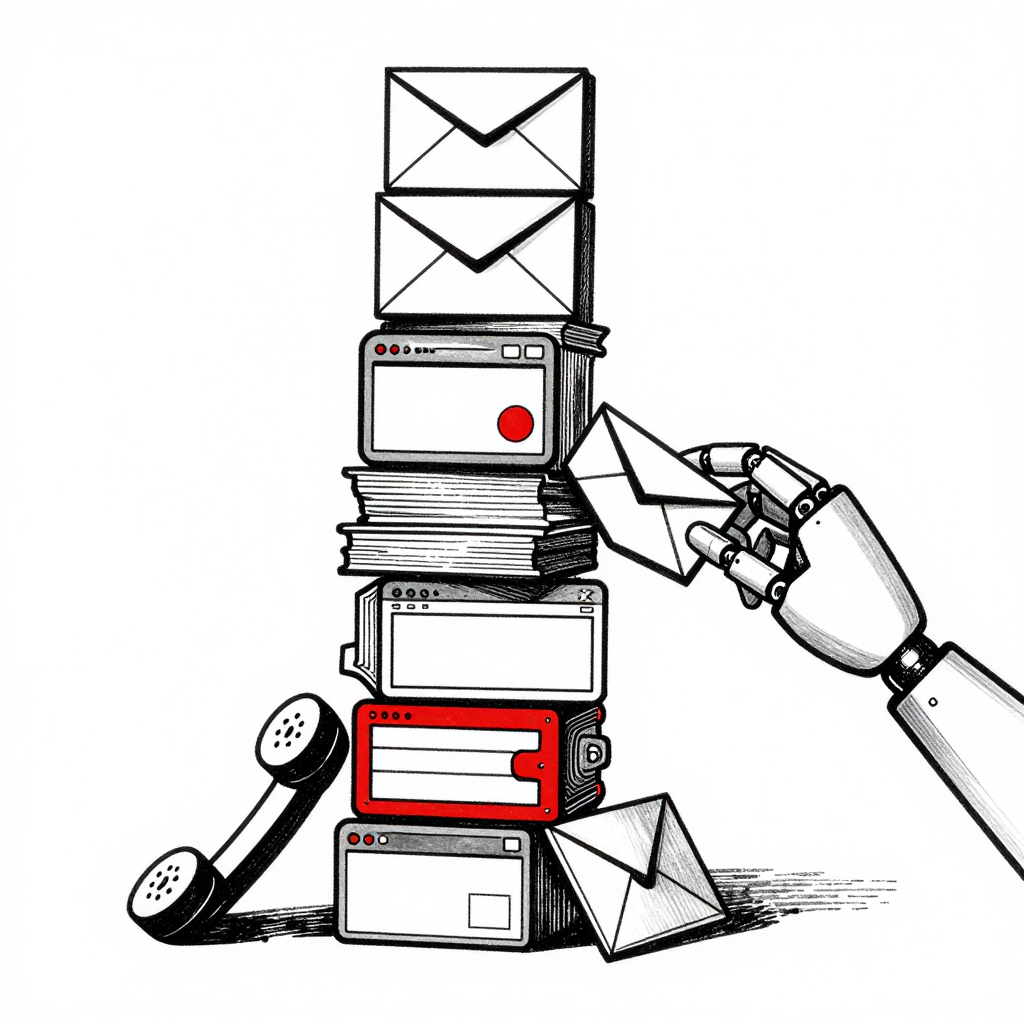
You can now give an AI agent its own email, phone number, computer, wallet, and voice. Here's every tool in the stack
A comprehensive mapping of the emerging agent infrastructure ecosystem, cataloging over a dozen companies building primitives specifically for AI agents. The list spans AgentMail for email, AgentPhone and Kapso for phone/WhatsApp, Daytona/E2B for sandboxed compute, Browserbase for web browsing, Mem0 for memory, and Kite/Sponge for payments. The post argues every capability a human employee takes for granted is being systematically rebuilt as an API. The top-voted comment noted that while the primitive stack is becoming table stakes, the real bottleneck is orchestration — error handling, failover logic, and state management across services.
In practice, once agents start interacting with real users or messy inputs, things like error handling, latency, and state management become the real bottlenecks. That's usually where the difference between a demo and a usable system shows up.
— Live-Instruction-74711 pts
The real moat is orchestration. Most primitive companies are going to get consolidated or acquired because the value is in making the whole stack work reliably 99% of the time, not in owning any single primitive.
— Immediate-Engine98377 pts
The most annoying part of using AI is not hallucinations
OP argues the most frustrating aspect of AI is not when it gets things wrong, but how confidently it delivers incorrect answers. The false certainty creates a psychological inversion where users second-guess themselves instead of the model. The thread resonated with developers building autonomous agents, where confident wrong actions are even more damaging — a desktop agent will click the wrong button and keep going, costing real time undoing damage. Commenters suggested prompting for explicit confidence scores and evidence chains as a workaround.
That's the calibration problem baked into most LLMs from day one. I fix it by prompting for confidence scores or evidence chains — now I verify the AI instead of doubting my gut.
— ninadpathak5 pts
This is 10x worse when you're building agents that take actions. My desktop agent will confidently click the wrong button and just keep going like nothing happened.
— Deep_Ad19594 pts
Built an autonomous AI agent as an experiment and got accepted in a $4 million hackathon from more than 2000 projects
After two months of persistent work on a fully autonomous agent, the author's project ranked near the top among 2,000+ submissions in a major hackathon. The key technical insight was a three-layer memory system — a main memory file with session summaries linking to full conversation logs — that allows the agent to maintain context across sessions without burning tokens on full history retrieval. Commenters noted that persistent state between sessions is exactly what kills most autonomous agents, making this architecture the likely differentiator.
Most autonomous agents die after one run because they lose memory between tasks. If yours chains sessions with persistent state, no wonder it beat 2000 others.
— ninadpathak3 pts
I built a three-layer memory system: a main memory file linking to session summaries in a DB, which link to full session conversations. It's fast and efficient — the key is to customize the setup based on the niche you are in.
— JeeterDotFun4 pts
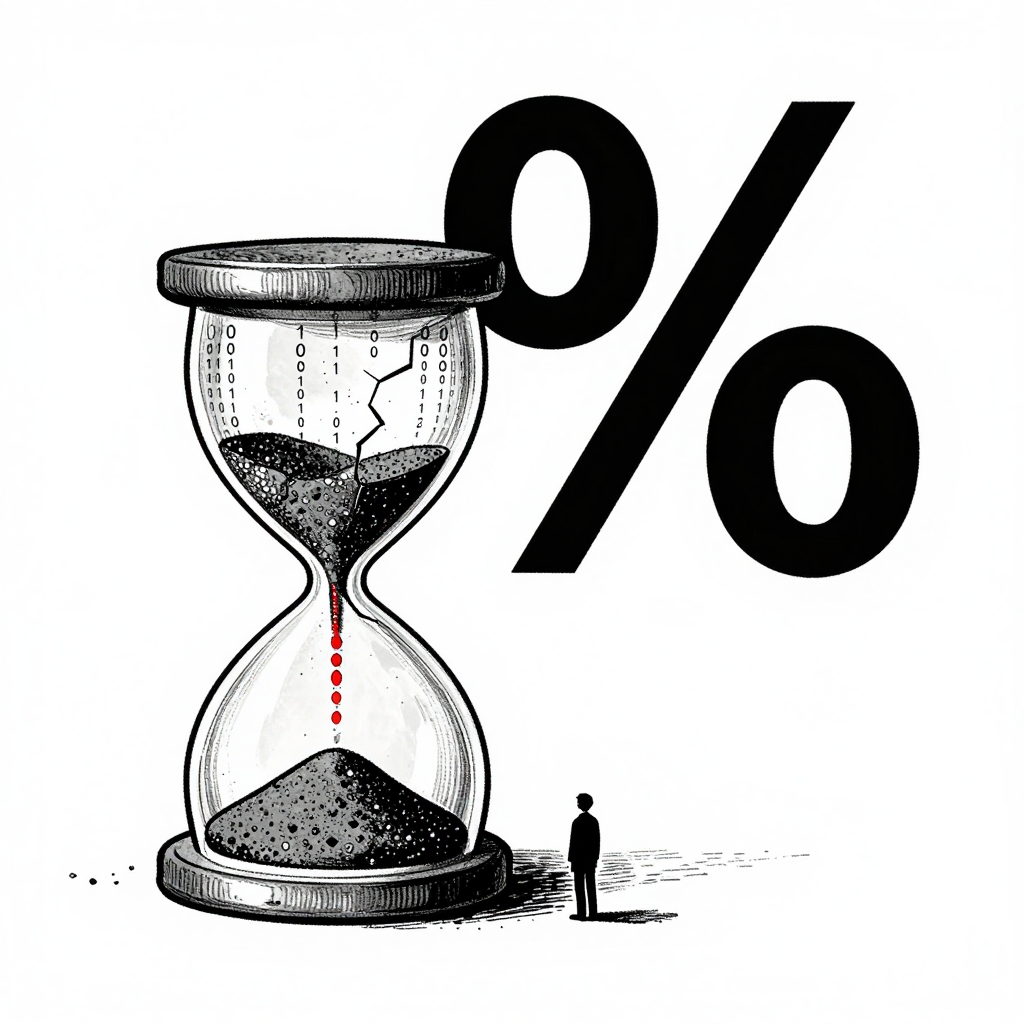
PSA: Claude Code has two cache bugs that can silently 10-20x your API costs
The day's biggest story across all subreddits. A developer spent days reverse-engineering the Claude Code standalone binary (228MB ELF) using Ghidra, a MITM proxy, and radare2, uncovering two independent bugs that break prompt caching. Bug one involves a native-layer string replacement in Anthropic's custom Bun fork that corrupts cache keys when conversations mention billing internals. The post links to a filed GitHub issue and provides version-specific workarounds. Users confirmed the bugs explain mysterious usage spikes, and one commenter noted version 2.1.30 appears to work correctly for both fixes.
I guess they DO vibe code at Anthropic now...
— Brave_Dick29 pts
This explains why our 5 hour usage sometimes just jumps from 0 to 15-40% after a /resume. And why people who constantly start brand new sessions are less likely to be affected.
— Factor01316 pts
So it seems like fewer and fewer people at Anthropic actually code or understand code now...
— muhlfriedl23 pts
Investigating usage limits hitting faster than expected
Anthropic's official account posted an acknowledgment that Claude Code users are hitting session limits far faster than expected, calling it the team's 'top priority.' The response was met with frustration rather than relief. The top comment (302 upvotes) demanded email communication for critical service changes instead of Reddit posts. Another highly-voted reply delivered a scathing translation: 'we noticed our silence was making all our loyal cheerleaders leave.' The thread captures a community at a tipping point — paying subscribers feeling like the product's value proposition is eroding while communication remains reactive and insufficient.
Hey ClaudeOfficial, I signed up using my email, can you please use that to communicate these critical changes instead of expecting your users to dig around the internet for statements?
— white_sheets_angel302 pts
When exactly did you guys become aware of it? It's only the biggest bitch on reddit for the past month.
— hedge36127 pts
Anthropic's peak-hour throttling is the wrong move, especially for $100/month subscribers
A Claude Max subscriber ($100/month) reports that Anthropic quietly changed how session limits work during peak hours (5am-11am PT), causing tokens to be consumed faster and effectively shortening usable session windows. For European users, peak hours perfectly overlap with their entire working day. Anthropic's own staff admitted roughly 7% of users would hit limits they wouldn't have before. The utility company analogy resonated — multiple commenters called it 'dynamic pricing without calling it that.' Several users reported switching to API billing for cost predictability.
The utility company analogy is spot on. You're paying premium rates for predictable access and they're giving you dynamic pricing without calling it that. Switched to API specifically because of this.
— Tatrions39 pts
The problem isn't the limits. It's that it's a percentage. There's NO transparency as to what the percentage value means and how it changes.
— NiteShdw24 pts
I've worked with 30+ founders. The worst performing founders were the ones who read the most startup advice.
An MVP builder who has shipped 30+ products argues the pattern is consistent: founders who made money broke the conventional rules. One launched without talking to a single user, built for his own problem, charged on day one, and hit $8k MRR in 4 months. Another refused to launch lean — polished UI, real onboarding from day one — and closed 3 enterprise clients in month one because procurement committees took her seriously on first impression. The key insight from comments: startup advice is written for consumer plays but gets blindly applied to enterprise. Price anchoring matters — charging $500/month attracts serious buyers, while $9/month attracts tire-kickers who never convert.
The lean/ugly MVP advice is right for consumer apps. It's actively wrong for enterprise B2B where the first impression gets shown to a procurement committee. The playbook depends on who's buying.
— QuillswiftHQ20 pts
The founder charging $500/month gets fewer leads but every single one is a real buyer. The founder charging $9/month gets hundreds of signups from people who clicked a button and never came back.
— Warm-Reaction-4566 pts
I went from 0 to 5 paid users in 2 weeks — here's what actually worked
After week one of heavy marketing (ads, cold DMs, posting) generated lots of visitors but zero users, the founder pivoted to commenting on other founders' launch posts with genuine feedback, then casually mentioning their tool. That alone generated 8 users. Then the real conversion driver: personally emailing all 8 users offering free 1-on-1 onboarding. Five became paid customers. Commenters recognized it as the textbook 'do things that don't scale' approach for first customers — building trust before asking for money. The challenge ahead is productizing that manual touch for scale.
In week 1 you were trying transactional marketing before you had trust. In week 2 you built the trust first. The challenge is how to scale this help-first approach from 50 to 500 users.
— Fragrant-Point10973 pts
Personal onboarding is the most underrated conversion tool in early-stage SaaS.
— brightleafdigital2 pts
My SideProject is no longer a SideProject, I decided to go all in
A freelance copywriter launched FeedbackQueue — a platform where developers submit tools and give feedback to others to earn credit, creating a reciprocal feedback loop without cold messaging anyone. In 21 days: 470K post impressions, 1,300 unique visitors in the last 3 days, 350 total users, and 3 paying customers actively providing bug reports. The founder decided to go full-time, walking away from freelance income. The concept of 'give feedback to get feedback' creates a self-sustaining community flywheel, though commenters questioned whether the credit economy would hold up at scale.
The 404 is great.
— ReiOokami6 pts
Does it support mobile app testing? Can I get testimonials and reviews on my Play Store?
— Suspicious_Fig_68601 pts

Everybody left Facebook for Instagram. Now they're leaving Instagram too. So what's next?
A marketer observes the exhausting cycle: Facebook to Instagram to Reels to Threads to YouTube Shorts, each platform shift forcing marketers to rebuild from scratch. Instagram engagement is dropping, Reels are harder to rank, and organic reach is nearly gone. The post asks the real question: should marketers own their audience through email lists and communities, or keep chasing whatever platform is hot? The overwhelming consensus was both — use platforms for discovery but move people to owned channels. The most resonant line: 'Don't build on rented land. You are at risk anytime something sits between you and the customer.'
Platforms bring reach, but you don't own that audience. I'm using Instagram/Shorts for discovery, but trying to move people to something I control like email or a small community.
— instastoryyoyo40 pts
Don't build on rented land. You are at risk anytime something sits between you and the customer.
— utahisastate31 pts
What's working in digital marketing that most people aren't talking about?
The post observes that LinkedIn would have you believe every business just needs more Reels and a chatbot, but the real underrated wins come from full-funnel thinking — connecting SEO, content, paid, and email so they actually talk to each other instead of running as isolated campaigns. Most agencies still sell channels, not strategy. The top comment shared two specific tactics that outperformed flashy channels: internal linking done with intent mapping instead of just adding more links, and reactivation emails to cold lists with hard CTAs instead of nurture sequences. Another commenter emphasized retention marketing as the most underrated play.
Two things that actually moved numbers: internal linking done with actual intent mapping, and reactivation emails to cold lists with a hard CTA. Boring stuff but the ROI was stupid good.
— MoistGovernment911512 pts
The better agencies start with the revenue goal and work backwards to figure out which channels actually move that number. That's a totally different conversation than 'here's what our SEO package includes.'
— ellensrooney8 pts
Free backlinks are a myth — change my mind
An SEO practitioner at a SaaS agency argues that the advice to 'just write quality content and backlinks will come naturally' is useless as an actual strategy, especially in competitive niches. Using a restaurant water analogy — technically free water requires leaving, driving home, and coming back — they illustrate that organic backlinks have hidden costs in time and effort that far exceed paying for link building directly. Their agency built 900+ links last year for a handful of B2B tech clients. The comments were split: some agreed that competitive niches demand aggressive link building, while others argued the framing was too absolute.
Media get organic links, businesses get paid links. If you're writing cool stuff and getting links organically, you are a media. As a business, you better have something better to do than hunt for free links.
— kra73ace2 pts
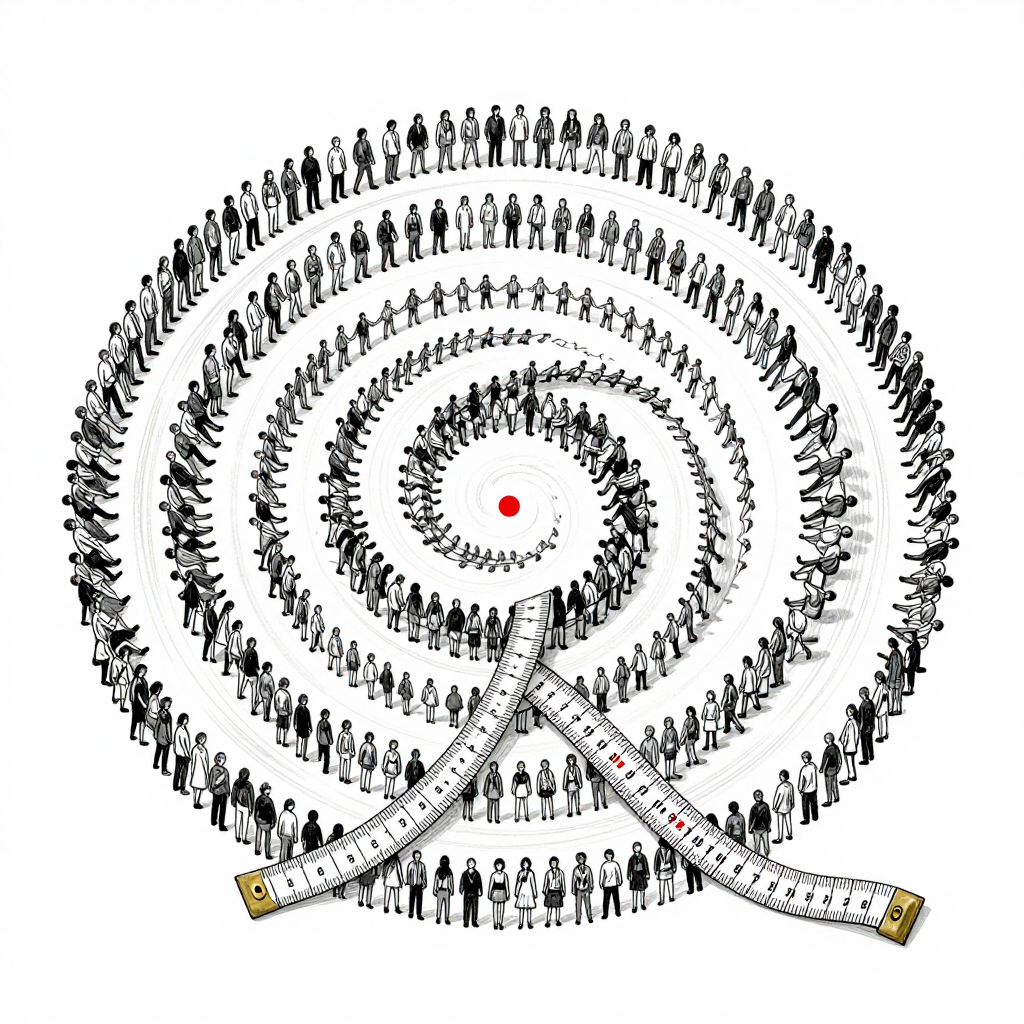
Optimizing for total human flourishing across geological time is the most rational civilizational goal we could have
A Substack essay argues that civilization should optimize for the total sum of human flourishing measured across geological timescales — not quarterly earnings or electoral cycles but millennia. The thesis draws on utilitarian and longtermist traditions, positioning resource stewardship and existential risk reduction as the primary moral imperatives. The comment section was skeptical but engaged. The most upvoted substantive reply pointed out the obvious implementation problem: measurement. Another commenter joked about consulting their 'flourishometer' for a reading of '14 microgrins.' A third reduced the thesis to 'take care of the planet and don't deprive future generations of critical resources.'
Okay, good luck measuring that. Very practical, very obvious, very transparent.
— SyntheticBees49 pts
I just consult my flourishometer, my personal reading is 14 microgrins.
— mohanimus28 pts
Sure. It's called taking care of the planet and not depriving future generations of critical resources.
— Ziggy_has_my_ticket35 pts
How Apocalypse isn't the end of the world, but a tool for social control
A Medium essay by Giuseppe Pannone examines how apocalyptic narratives function not as genuine predictions of the end but as instruments of power. The argument traces from early Christian eschatology — where promises of divine justice kept oppressed communities faithful and contained — to modern governments using existential threats to maintain citizen dependence on state leadership. The most substantive comment pushed back, asking for specific historical examples rather than broad assertions and noting the argument echoes observations over a century old. The piece touches on important ideas but, as critics noted, needs more evidentiary grounding.
Give a concrete example. 'Back in the 2nd century, so-and-so proclaimed blah.' Otherwise, this feels like a simple assertion designed to fit within a specific worldview.
— Shield_Lyger7 pts
The Mexican embrace of uncertainty, forged in the crucible of history, captures the true vulnerability of our existence
An Aeon essay introduces 'Mexistentialism' — a philosophical tradition rooted in Mexico's turbulent history that embraces uncertainty and vulnerability as fundamental features of human existence rather than problems to be solved. Unlike European existentialism's focus on individual choice in the face of absurdity, the Mexican tradition emphasizes communal resilience forged through colonialism, revolution, and economic instability. The essay argues this perspective offers a corrective to the Eurocentric assumption that objectivity and control are the only valid philosophical orientations. Comments were sparse but appreciative, with one calling for more non-Western philosophical perspectives.
I personally cannot wait until the eurocentric viewpoint is no longer the authority on all things knowledge-related. There are so many different ways to view the world.
— __Knowmad2 pts
FeedbackQueue
Get real developer feedback on your tool without cold messaging anyone
Copilot Cowork (Microsoft)
Multi-model AI agent handling tasks across Outlook, Teams, and Excel
Claude Code Interactive Tutorial
Learn Claude Code by doing, not reading
DeepMind's New AI Just Changed Science Forever
Covers a new DeepMind paper on a scientific AI system that marks a significant breakthrough. The video has already pulled over 200K views and 16K likes in just a few days, signaling major community interest in the underlying research.
Two AI Models Set to 'stir government urgency', But Will This Challenge Undo Them?
Examines exclusive reports about OpenAI's new Spud model and an upcoming Anthropic model alongside the launch of ARC-AGI-3 benchmark. Discusses whether the extreme difficulty of the new benchmark and its scoring metrics reveal meaningful gaps in current AI capabilities.