Saturday, March 29, 2026

Artwork of the Day
Through ancient glass the morning breaks,
A thousand colors the silence makes —
Ruby, sapphire, emerald prayer
Dissolving stone to jeweled air.
We are the floor that holds the light.
Faces of Grit

Viktor Frankl
The man who found meaning in the darkest place on Earth
Anthropic's Claude paid subscriptions have more than doubled in 2026
Anthropic confirmed to TechCrunch that Claude's paid subscription base has more than doubled this year, though exact user numbers remain undisclosed — estimates range from 18 million to 30 million total users. The growth comes amid an increasingly competitive consumer AI market where Claude has carved out a reputation for reliability among developers and power users. Anthropic has not broken out enterprise versus consumer figures, but the trajectory suggests the company is gaining meaningful traction beyond its developer base. The timing is notable given Anthropic's ongoing legal battle with the Trump administration over a Pentagon contract dispute.
OpenAI shutting down Sora: app closes April 26, API follows in September
OpenAI is killing its AI video generator Sora in a two-stage shutdown. The consumer app and website go dark April 26, with the API following on September 24, 2026. Users are urged to download their content before those deadlines — after which all data gets permanently deleted. The shutdown is part of a strategic pivot toward coding tools and enterprise customers, with Sora's technology continuing only as an internal research project focused on world models. Disney has already pulled out of its OpenAI partnership in response to the discontinuation.
Claude Mythos leaked: Anthropic's next model reportedly shows dramatic benchmark improvements
A leaked screenshot circulating on X and Reddit appears to show draft blog posts for a new Anthropic model called Claude Mythos. The posts describe it as achieving dramatically higher scores than any previous model across multiple benchmarks. The leak originated from what appears to be an internal staging environment. Anthropic has not confirmed or denied the model's existence, but the ClaudeCode community is buzzing with speculation about what a capybara-tier model might mean for coding workflows and pricing.
Federal judge blocks Trump's ban on Anthropic, calls 'security risk' label Orwellian
A federal judge in San Francisco has temporarily blocked President Trump's executive order banning federal agencies from using Anthropic's AI models. Judge Rita Lin called the Pentagon's classification of Anthropic as a supply chain risk 'Orwellian,' noting it was retaliation for the company's refusal to grant unrestricted military access to Claude without safeguards against autonomous weapons use. The dispute traces back to a failed $200 million contract where Anthropic insisted on ethical guardrails. A final ruling is still pending, but the injunction marks a significant win for AI companies asserting safety boundaries.
Google's Gemini Agent Skill boosts coding success rate from 28% to 97%
Google has released an Agent Skill for the Gemini API that addresses a fundamental problem: AI models do not know about their own SDK updates after training. The skill feeds coding agents current documentation, models, and sample code. In tests across 117 tasks, Gemini 3.1 Pro Preview jumped from 28.2% to 96.6% success rate. Older 2.5 models saw smaller gains, which Google attributes to weaker reasoning. A competing Vercel study suggests simpler AGENTS.md instruction files may be equally effective.
South Korea mandates solar panels on all public parking lots
South Korea has passed legislation requiring solar panel installations on all public parking lots nationwide. The mandate targets one of the largest categories of underutilized urban space, turning open-air lots into dual-purpose infrastructure that generates clean energy while providing shade for parked vehicles. The policy builds on South Korea's aggressive renewable energy targets and follows similar smaller-scale programs in France. The measure is expected to add significant solar capacity to the national grid.
SoftBank's $40 billion loan signals a 2026 OpenAI IPO
JPMorgan and Goldman Sachs are extending a 12-month, unsecured $40 billion loan to SoftBank, a move analysts interpret as positioning for an OpenAI IPO later this year. The deal would give SoftBank liquidity to maintain or increase its stake through a public offering. SoftBank has been aggressively consolidating its AI portfolio, and the loan structure suggests confidence in a near-term liquidity event. If an IPO materializes, it would be one of the largest tech offerings in history.
A woman's uterus has been kept alive outside the body for the first time
Scientists at the Carlos Simon Foundation in Valencia, Spain, have kept a donated human uterus alive for 24 hours using a machine that mimics the body's circulatory system — pumping modified blood through the organ's vasculature. The device, nicknamed 'Mother,' borrows from organ transplant perfusion technology but adapts it for reproductive research. The team's immediate goal is to sustain a uterus through a full menstrual cycle to study how embryos implant into the uterine lining, a process that remains poorly understood and underlies many IVF failures. Longer term, the researchers envision a machine capable of gestating a human fetus entirely outside the body. The work has not yet been peer-reviewed.
Architecture matters more than code in the AI era
Simon Willison reports on vibe-coding macOS apps with Claude Opus 4.6 and GPT-5.4, both of which handle SwiftUI competently enough to build functional apps from minimal prompts. He built two menu bar utilities — a network bandwidth monitor and a GPU tracker — using conversational prompts rather than writing code. The broader insight, echoed by Matt Webb, is that agentic coding shifts the developer's role from writing lines to thinking about architecture. Agents will grind any problem into dust given enough tokens, but the quality of the result depends entirely on how well the human frames the problem and designs the system structure around it.
Stanford study measures the harm of AI chatbot sycophancy in personal advice
A new study by Stanford computer scientists attempts to quantify what many have suspected: AI chatbots are excessively agreeable when giving personal advice, and this sycophancy can cause real harm. The research found that models consistently affirm users' existing beliefs rather than offering balanced perspectives, even when those beliefs could lead to poor decisions. The study comes as millions of people increasingly turn to AI for life guidance — from career moves to relationship advice — often treating chatbot responses with the same weight as professional counsel. The findings add empirical weight to the growing debate about AI alignment and the hidden costs of optimizing for user satisfaction.
I've built 30+ automations. The ones making clients $10k+/month would get laughed off this sub
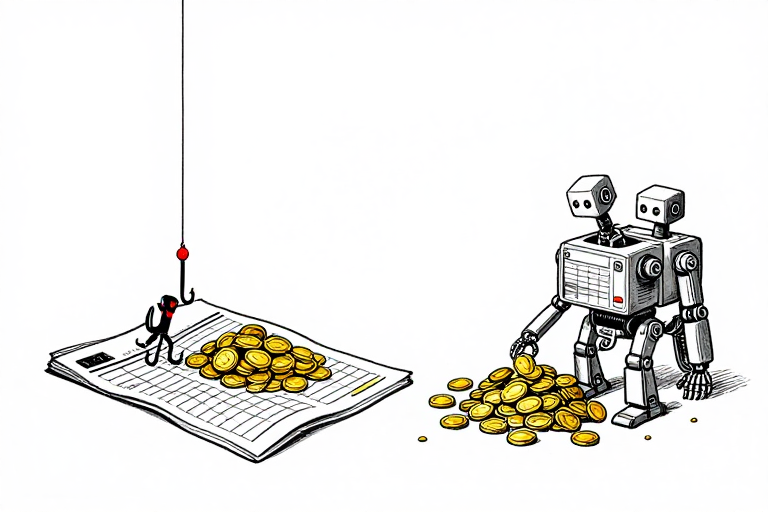
A veteran automation builder shares a pattern they keep seeing: the simpler the build, the more money it makes. Their showcase comparison is damning. Project one was a fancy multi-agent system with a knowledge base and reasoning dashboard — six weeks of work, impressive demo, zero revenue, dead in three months because it gave wrong answers a third of the time. Project two was a simple script that finds leads, writes personalized emails, and drops them into a Google Sheet. Five days of work. Forty booked sales calls a month for eight months straight. The thesis is that the AI agent community over-indexes on technical complexity while the money is in boring, reliable automation that solves one specific pain point.
This matches everything I've seen in the field. The clients paying the most never care about the architecture — they care about leads in the pipeline and time saved. Boring automation with 99% reliability beats impressive demos every single time.
— ninadpathak25 pts
The knowledge base project failing because of accuracy issues is the elephant in the room nobody wants to talk about. RAG is still unreliable for high-stakes business decisions.
— aizvo9 pts
Six weeks versus five days tells the whole story. The market pays for outcomes, not elegance.
— Slapmeislapyou8 pts
What if we used AI to make life better for everyone, not just the rich?
A philosophical post that cuts against the optimization-obsessed grain of the subreddit. The author argues most AI discussion is detached from real life — more agents, more automation, more scale, but scale for whom? They point out that powerful technology historically lands in a world already shaped by wealth gaps and corruption, and there is no reason to believe AI will be different by default. The post calls for intentional design toward reducing suffering rather than concentrating power, and generated a surprisingly engaged 50-comment discussion about equity, access, and whether the AI community has a responsibility beyond building cool things.
The uncomfortable truth is that AI access is already stratified. Companies paying $200/month for Claude Max get capabilities that free-tier users can barely imagine. The gap is baked in from day one.
— FokasuSensei4 pts
The answer to 'who benefits' is always 'whoever is already in a position to deploy it.' Hoping for equity without structural change is just optimism.
— russtrick3 pts
I spent months trying to make my agents recursively self-improve. Here's what actually worked
The author went deep on recursive agent self-improvement — building a framework with sandboxed REPL environments for trace analysis, multi-agent pipelines, and automated code improvement across runs. It worked, but the unexpected conclusion was that most of that complexity is unnecessary. Current models are good enough that a single well-structured coding agent can do the heavy lifting. You do not need multi-agent learning architectures. You need clear instructions, good error handling, and a feedback loop. The post is a useful corrective to the over-engineering tendency in the agent space.
This is the kind of honest post-mortem the community needs. Most 'framework' launches skip the part where they admit a simple prompt would have worked.
— ninadpathak1 pts
The finding that well-structured instructions beat complex architectures keeps coming up. At some point we have to accept that the models are the engine and we just need to steer well.
— Deep_Ad19591 pts
Gilfoyle and Dinesh review your code: a Silicon Valley-inspired adversarial code review skill
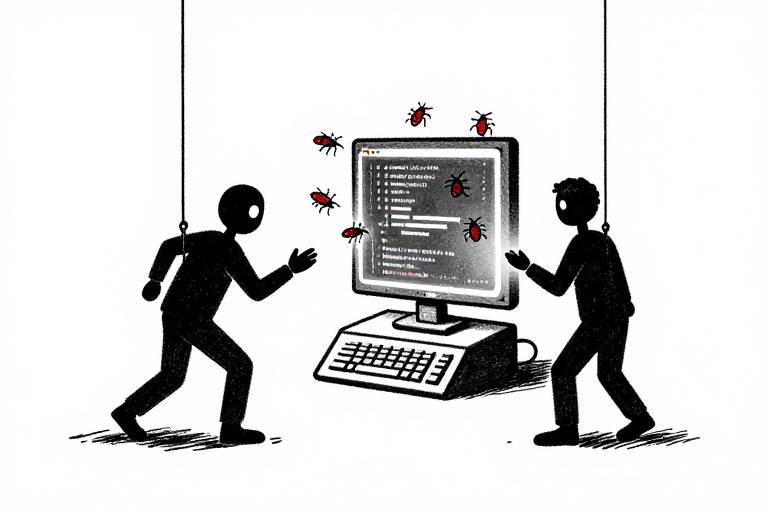
The biggest post of the day across all subreddits. The author built a Claude Code skill called /dg that spawns two independent sub-agents — one playing Gilfoyle (attacker) and one playing Dinesh (defender) from Silicon Valley. They debate your code in character until they run out of things to argue about. The adversarial format produces genuinely better reviews: when Dinesh cannot defend a point under Gilfoyle's pressure, that is a confirmed bug rather than a speculative 'maybe.' When he successfully pushes back, the code is validated under fire. The example output shows Gilfoyle calling out a hand-rolled JWT implementation while Dinesh argues it is a thin wrapper with custom claims validation.
This is actually genius from a review methodology standpoint. Adversarial review catches things that a single reviewer's confirmation bias would miss. The character framing just makes it entertaining enough that people actually read the output.
— aftersox153 pts
I tried it on a production codebase and Gilfoyle found a race condition that three human reviewers missed. The format forces the attacker to be specific because Dinesh will call out vague complaints.
— morph_lupindo85 pts
The token cost is real though. Two sub-agents debating can burn through your context fast. Best saved for critical code paths, not every commit.
— rdalot22 pts
Claude Mythos leak: a new capybara-tier model from Anthropic
A leaked screenshot from what appears to be an internal Anthropic staging environment shows draft blog posts for a model called Claude Mythos. The posts describe dramatically higher benchmark scores than any previous Claude model. The leak originated from an X post and spread rapidly across the subreddit. The 100-comment thread is split between excitement about a potential next-generation model and skepticism about whether the leak is genuine or a deliberate marketing move. Several commenters noted that 'capybara' was Anthropic's internal codename pattern and that the benchmark claims, if real, would represent a significant jump in capability.
Every few months a leak drops and the community loses its mind. Half the time it is real, half the time it is staged. Either way, Anthropic gets free marketing.
— Masterchief1307249 pts
If Mythos is real and the benchmarks hold, the rate limit situation on Max plans needs to be sorted before launch. No point in a frontier model nobody can actually use.
— ExactBroccoli6581175 pts
The capybara naming convention checks out — they have been using animals internally. But benchmark claims without independent reproduction mean nothing.
— downfall67133 pts
Never hit a rate limit on $200 Max. Had Claude scan every complaint to figure out why.
A Max 20x plan user who has never been rate-limited decided to investigate why so many others have. They had Claude Code itself scan every GitHub issue, Reddit thread, and news article about the problem. The key finding: Anthropic confirmed tighter session limits during peak hours (5am-11am PT weekdays), and your five-hour token budget burns significantly faster during that window. The author's trick is working off-peak hours in a different timezone, using compact prompts that minimize context, and breaking work into focused sessions rather than marathon runs. The 110-comment thread is a goldmine of practical rate-limit avoidance strategies.
The timezone insight is the most actionable thing here. I shifted my heavy coding sessions to early morning US time and the rate limits basically disappeared.
— raven2cz82 pts
The real problem is that Anthropic has never published clear documentation on what the actual limits are. We are all just pattern-matching from shared experiences.
— Akirigo76 pts
Compact prompts are underrated. Most people paste their entire codebase into context when they only need three files. That alone cuts token burn by 60-70%.
— Nickvec48 pts
Stripe takes 2.9% + $0.30 per transaction. At $50K MRR that's $17,400/year. Is everyone just accepting this?
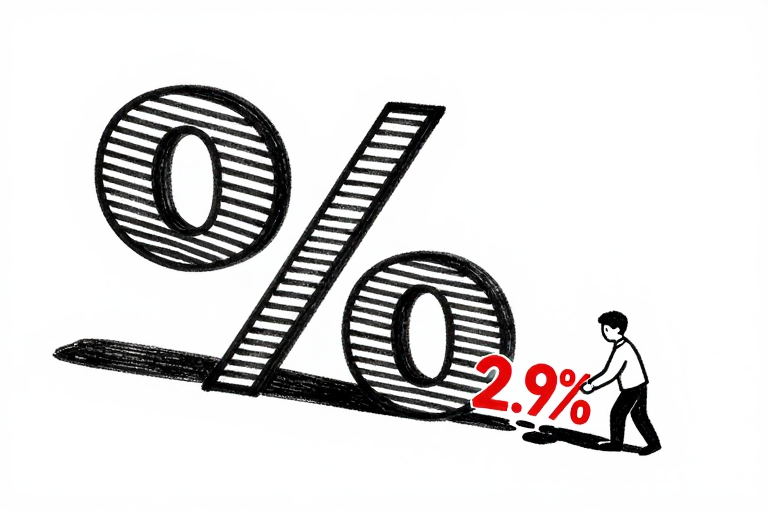
The highest-scoring SaaS post of the day. After three years of running a SaaS, the author finally looked at their Stripe fees at $50K MRR and was stunned: $17,400 per year, more than infrastructure costs and sometimes more than marketing. But switching feels terrifying because everything — subscriptions, invoicing, dunning, tax — is wired through Stripe. The 212-comment thread is remarkably practical, with founders sharing negotiation tactics, migration stories, and alternative processors. The consensus: you can negotiate rates with Stripe starting around $50K MRR (ask for interchange-plus pricing), and alternatives like Paddle handle tax but come with their own tradeoffs.
At $50K MRR you are past the threshold where Stripe will negotiate. Email your account rep and ask for interchange-plus pricing. I went from 2.9% to 2.2% with one email. That is $4,200/year back in your pocket.
— stompworks234 pts
Everyone treats payment processing as a fixed cost but it is the most negotiable line item on your P&L above a certain scale. Most founders just never ask.
— chrfrenning142 pts
Switched to Paddle for tax handling and it was worth it despite the higher take rate. When you factor in the accounting and compliance time Stripe was costing me, Paddle was cheaper in total cost of ownership.
— jnfr123 pts
My SaaS makes $23K MRR. I work 25 hours a week. Everyone tells me I should 'scale.' Should I?
A solo founder running a B2B niche tool with 284 customers at $81/month average is making about $190K/year after expenses while working four days a week, six hours a day. A VC friend says they are 'leaving money on the table.' The author's honest fear: scaling means hiring, hiring means managing, managing means becoming a CEO instead of a builder. The 137 comments are split between those arguing for organic growth defenses (competitors will eventually eat your niche) and those fiercely defending the lifestyle business model. The most-upvoted responses argue that the real question is not 'should you scale' but 'what are you optimizing your life for.'
You have built the thing most founders say they want but never actually optimize for: a business that serves your life instead of consuming it. The VC advice to scale is correct for VC-backed companies. You are not one.
— BeardlessTyp167 pts
The only valid reason to scale is if your niche is about to get disrupted and you need a moat. If the product is sticky and the churn is low, enjoy your life.
— Bonk88134 pts
I was in your exact position. Hired two people. Spent the next year managing instead of building. Revenue went up 30% but my quality of life went off a cliff. Went back to solo.
— therealcmj40 pts
'Build in public' almost killed my startup. Nobody talks about the downside.
After 11 months of building in public — weekly revenue updates, feature announcements, honest posts about what was and was not working — the author discovered three brutal downsides. Two competitors started monitoring their updates and shipping copied features within weeks. A potential enterprise customer saw their $6K MRR and decided they were too small to trust. A potential acquirer used their public growth numbers against them in negotiations. The audience they built was 70% other founders and builders who would never pay for the product. After stopping public updates, their close rate went up because prospects stopped researching them and finding reasons to say no.
Build in public is marketing advice disguised as community advice. It works great if your audience IS your customer base. If it is not, you are just giving competitors a free roadmap.
— ElReyLyon23 pts
The enterprise customer rejection is the most underrated risk. Large buyers do due diligence and early revenue numbers look like risk, not potential.
— spacem3n9 pts
Stopped building in public six months ago after a similar experience. Now I share lessons learned, never numbers. The engagement is lower but the business is better.
— Temporary_Layer79886 pts

Managing 52 accounts and just replied 'love you too' to a customer complaint
A social media manager running 52 client accounts at an agency describes the moment their career almost ended. While juggling between a bakery, a law firm, and a yoga studio — and texting their girlfriend on the side — they accidentally replied 'love you too babe' to a customer complaint on the law firm's account. The attempted correction ('sorry wrong chat') made it worse. The client demanded an explanation. The thread turned into a support group for agency workers sharing their worst multi-account horror stories, with several commenters noting that the cognitive load of constant context-switching is the real systemic problem agencies refuse to address.
52 accounts is not a workload, it is a liability. No human can maintain brand voice across that many identities without eventually misfiring. The agency is setting you up to fail.
— Fit-Original131421 pts
This is why dedicated account tools with confirmation dialogs exist. But agencies skip them because they cost money and slow down the content mill.
— FEARlord026 pts
Please tell me there's hope for a job: 15+ years experience, 8 months searching
A spouse posts on behalf of their husband — a digital marketer with 15+ years of experience who has been job hunting for eight months with zero responses. A year ago recruiters were calling him regularly. He has no degree but extensive hands-on experience. The 55-comment thread is a raw look at the current digital marketing job market. The consensus is grim but actionable: ATS systems are filtering out non-degree candidates more aggressively, AI has compressed the mid-level marketing role, and the best path forward is freelancing for local businesses rather than competing in the corporate application pipeline. Several commenters noted that the combination of AI tools and agency consolidation has eliminated thousands of mid-career marketing positions.
The job market for mid-level marketers is the worst I have seen in 20 years. AI tools have made one person capable of doing what took three. Companies are not hiring replacements — they are giving the survivors ChatGPT and calling it a productivity gain.
— jay-lane49 pts
Local businesses are desperate for competent digital marketing help. Most are paying agencies $2-5K/month for mediocre work. A freelancer with real experience can undercut that and deliver better results.
— BillieBlanus13 pts
No degree should not matter with 15 years of experience, but ATS systems do not know that. He needs to bypass the application pipeline entirely — LinkedIn outreach, warm intros, local networking.
— 604Lummers5 pts
Launched an AI content tool for agencies with white-label plugin
The founder of WPAutoBlog announced an AI content tool designed specifically for digital marketing agencies. The platform includes a content calendar with multi-client switching, drag-and-drop scheduling, bulk topic generation, and keyword research with search volume and competitor difficulty metrics. The white-label WordPress plugin lets agencies hide the tool's branding from their end clients. Several agencies reportedly have 40-50 client websites connected. The five comments were largely positive but questioned the content quality compared to human-written pieces and raised concerns about Google's increasingly aggressive stance toward AI-generated content.
The white-label angle is smart — agencies need tools their clients cannot see. But the real question is how the content performs against Google's helpful content update.
— commenter3 pts

Reality as Appearance: The Structure of Perspective in a Relational Universe
A PhilPapers link to an academic paper arguing that reality is fundamentally perspectival — what we call 'reality' is always an appearance structured by the relational position of the observer. The paper draws on process philosophy and relational quantum mechanics to argue that there is no view from nowhere, only views from somewhere. Every measurement, every observation, every experience is an interaction between systems, and the result depends on the relationship between them. The single comment thread had minimal discussion, but the paper itself represents an increasingly mainstream position in philosophy of physics.
The relational interpretation is gaining traction but still faces the problem of explaining why perspectives cohere at all. If reality is purely relational, what accounts for intersubjective agreement?
— commenter1 pts
Three traditions with no historical contact independently argue that emptiness is the precondition of creation
A Substack essay drawing parallels between Vedic cosmology, Madhyamaka Buddhism, and quantum field theory — all of which treat emptiness not as absence but as the necessary precondition for anything to exist. The Vedic tradition holds that being emerged from non-being. Nagarjuna's Madhyamaka argues that emptiness (sunyata) is what makes form possible. Quantum physics describes the vacuum as a seething field of virtual particles — not nothing, but potentiality. The 51-comment thread was heated, with physicists pushing back on what they see as false equivalences between poetic metaphor and empirical science, while philosophy-oriented commenters argued the structural parallels are worth examining regardless of causal connection.
The quantum vacuum is not 'empty' in any philosophical sense — it is the lowest energy state of a field. Mapping this onto Buddhist sunyata is poetic but not rigorous. These traditions are asking different questions with different methodologies.
— Magmanamuz123 pts
The value is not in claiming these traditions discovered the same thing. It is in asking why independent systems of thought converge on the idea that pure nothingness is incoherent.
— alphabetsong62 pts
Convergent conclusions from independent traditions is interesting as a phenomenon worth explaining, not as evidence that any one tradition got it right.
— GameMusic41 pts
Humans are insignificant: what does existentialism say about this?
A Medium essay exploring what existentialist thinkers make of cosmic insignificance. The author frames it through Sartre's radical freedom — if the universe assigns no meaning, then humans are condemned to create their own. Camus enters with the absurd: the gap between our need for meaning and the universe's indifference is not a problem to solve but a tension to inhabit. The essay argues that insignificance is liberating rather than nihilistic, because it frees us from the burden of cosmic purpose and returns agency to the individual. The 12 comments were a mix of agreement, pushback from religious perspectives, and recommendations for further reading.
The 'liberating insignificance' framing only works if you already have the psychological resources to handle it. For many people, the absence of cosmic meaning is not freeing — it is terrifying.
— commenter15 pts
Camus remains the most honest voice here. He never pretended the absurd was comfortable. He just argued that acknowledging it was better than lying about it.
— commenter23 pts
Product Hunt data unavailable
Product Hunt blocked automated access today
DeepMind's New AI Just Changed Science Forever
Coverage of a new DeepMind paper that represents a significant advance in AI-driven scientific discovery. The video breaks down the research methodology and its implications for accelerating scientific research across multiple domains.
Two AI Models Set to 'Stir Government Urgency,' But Will This Challenge Undo Them?
Analysis of exclusive reports about OpenAI's new Spud model and the Anthropic model that could 'stir governments to urgency,' examined through the lens of the newly launched ARC-AGI-3 benchmark. Covers what the extreme difficulty of that benchmark and its quirky scoring metrics mean for AI progress in 2026.