Thursday, February 27, 2026

Artwork of the Day
The violin speaks in indigo streams,
each note a ribbon the eye can taste —
amber crescendos, emerald dreams,
a symphony the darkness traced.
Close your eyes; the colors remain.
Faces of Grit

Ernest Shackleton
The man who lost everything except his crew
Anthropic Refuses Pentagon's Demands, Stands Firm on Lethal Autonomous Weapons Ban
Less than 24 hours before a Pentagon-imposed deadline, Anthropic CEO Dario Amodei publicly refused the Department of Defense's demands for unrestricted access to its AI systems. The company is holding two red lines: no mass surveillance of Americans and no lethal autonomous weapons without human oversight. The standoff is the culmination of weeks of negotiations after Defense Secretary Pete Hegseth moved to renegotiate all AI lab contracts with the military. OpenAI has reportedly been more willing to accommodate. The statement hit the top of Hacker News with over 1,000 upvotes and 600+ comments, making it the most-discussed story of the day.
Jack Dorsey's Block Lays Off Nearly Half Its Workforce in AI Bet
Block, the fintech company behind Square and Cash App, is cutting approximately 4,000 employees — nearly half its workforce — in what Dorsey calls a 'deliberate and bold embrace of AI.' Dorsey told employees the company would replace many roles with AI systems and predicted other companies would follow suit. The move echoes Elon Musk's approach to workforce reduction. The layoffs dominated Hacker News with 529 points and over 500 comments, with many questioning whether the AI replacement narrative is a convenient cover for cost-cutting.
Perplexity Launches 'Computer,' an AI Agent That Orchestrates Other AI Agents
Perplexity has unveiled 'Computer,' a new system available to its $200/month Max subscribers that coordinates multiple AI agents running different models to complete entire workflows. Users describe an outcome in natural language, and the system creates subtasks assigned to specialized agents. It currently runs Claude Opus 4.6 as its core model, supplemented by Gemini, Grok, and ChatGPT 5.2. Ars Technica compared it to a 'buttoned-down, ostensibly safer take on the OpenClaw concept,' while The Decoder noted the obvious business incentive for a company built on top of other providers' models.
Google Pays $1 Billion for Form Energy's 100-Hour Battery Technology
Google has acquired Form Energy's massive iron-air battery technology for $1 billion, a deal that paves the way for the startup to raise additional funding before a potential IPO next year. Form Energy's batteries can store energy for up to 100 hours, a capability critical for data center operations that demand continuous power. The acquisition signals big tech's increasing desperation to secure reliable energy infrastructure as AI compute demands surge beyond what traditional power grids can supply.
Microsoft Previews Copilot Tasks: Cloud-Based AI That Works While You Sleep
Microsoft announced Copilot Tasks, a new feature that uses its own cloud-based computer and browser to handle background work like scheduling, document generation, and study plans. Users describe tasks in natural language and can set them to run on a recurring, scheduled, or one-time basis. The system runs independently of the user's device, completing work even when the computer is off. It joins a growing ecosystem of always-on AI assistants, alongside Anthropic's Cowork scheduled tasks feature announced the same week.
Alibaba's Open-Weight Qwen 3.5 Takes Aim at Western Frontier Models
Alibaba expanded its Qwen 3.5 model series with four new variants, claiming performance matching or exceeding GPT-5 mini and Claude Sonnet 4.5 across multiple benchmarks. The smaller Qwen3.5-35B model outperforms its much larger predecessor Qwen3-235B, demonstrating that better architecture and data quality trump raw size. All models ship under Apache 2.0 license, and the hosted Flash variant costs just $0.10 per million input tokens — a fraction of Western competitors. The release intensifies the open-weight model race that is steadily eroding the moat around proprietary AI labs.
Anthropic Acquires Vercept to Boost Claude's Computer Use Capabilities
Anthropic has acquired AI startup Vercept, whose VyUI interface recognition model reportedly outperformed comparable OpenAI technology in benchmarks for screen element identification. The team behind Vercept's desktop AI agent 'Vy' is joining Anthropic to enhance Claude's computer use capabilities. Claude already scores 72.5 percent on the OSWorld benchmark with Sonnet 4.6, up from less than 15 percent at the end of 2024. The acquisition positions Anthropic to push that number higher as the race to build AI that can reliably operate human-designed interfaces accelerates.
Will Vibe Coding End Like the Maker Movement?
This essay draws a provocative parallel between vibe coding and the maker movement of the 2010s, which promised to democratize hardware manufacturing but ultimately remained a hobby for most participants. The author argues that vibe coding may follow a similar arc — an initial explosion of enthusiasm where non-programmers build functional prototypes, followed by a reckoning when those prototypes need maintenance, security reviews, and scaling. The piece generated 333 points and over 300 comments on Hacker News, with the community deeply divided between those who see vibe coding as genuinely transformative and those who view it as the latest iteration of a recurring pattern where easy creation tools produce fragile artifacts.
Andrej Karpathy Says Programming Is 'Unrecognizable' Now That AI Agents Actually Work
Former Tesla and OpenAI AI researcher Andrej Karpathy doubled down on his claim that programming has fundamentally changed over the past two months, describing how an AI agent independently built a video analysis dashboard over a weekend with minimal human input. What makes this notable is how recently Karpathy held the opposite view — as late as October 2025, he called agentic AI hype exaggerated, saying the products were far from ready. He fundamentally changed that opinion after the release of Opus 4.5 and Codex 5.2. The post was the top story on r/ClaudeCode with 617 upvotes, though commenters pushed back on whether Karpathy's definition of 'working' accounts for production reliability and long-term maintenance.
Hoard Things You Know How to Do: Agentic Engineering Patterns
Simon Willison published a new entry in his agentic engineering patterns guide, arguing that one of the most powerful inputs for coding agents is a personal collection of working code examples that demonstrate what is technically possible. The principle is simple: knowing that something can be done, backed by running code, makes you dramatically more effective at directing AI agents. Willison describes how he maintains collections across his blog, TIL blog, over a thousand GitHub repos, and a tools website filled with LLM-assisted prototypes. His favorite prompting pattern is telling an agent to build something new by combining two or more existing working examples — a strategy that collapses what might take hours of research into a single effective prompt.
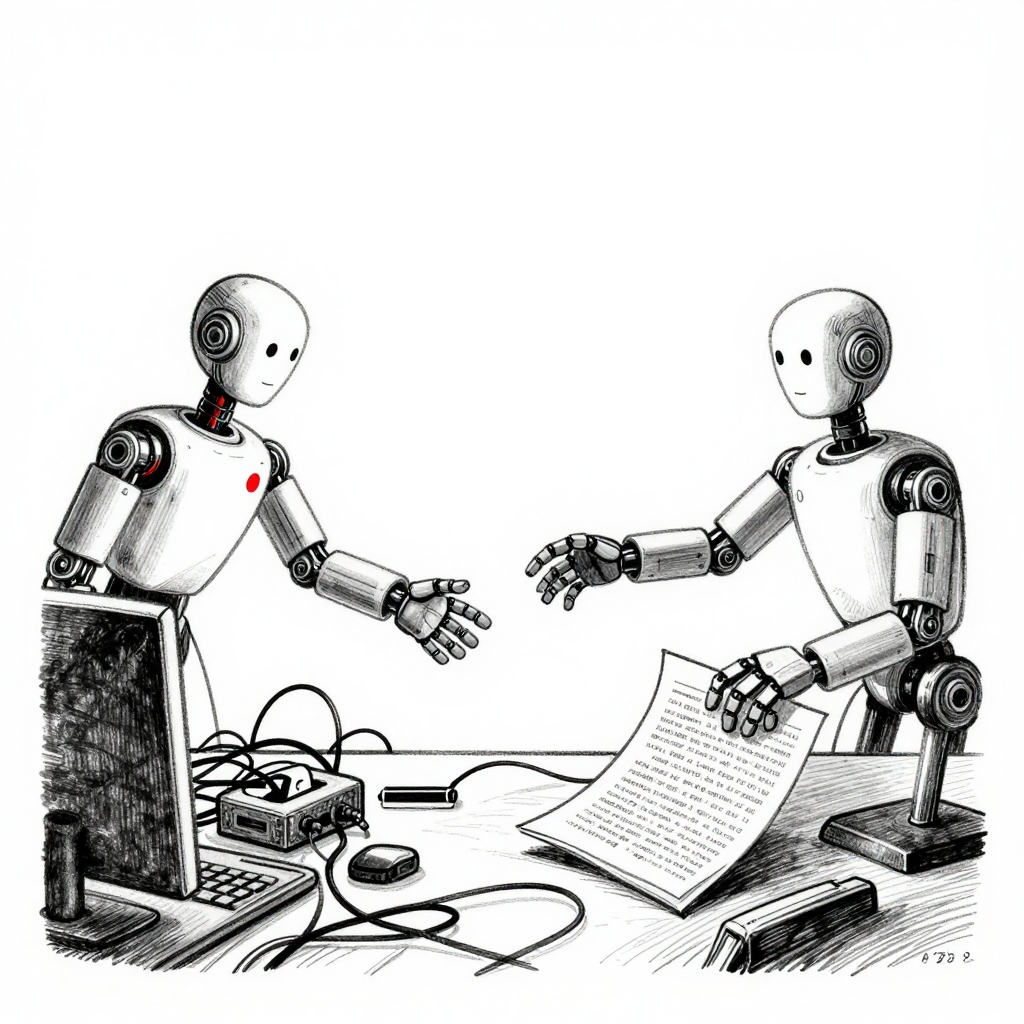
Which AI agents are actually doing real work for you daily?
The post cuts through the hype cycle and asks for real, daily-use agent setups rather than demos or theoretical capabilities. OP wants specifics: which agents, what tasks are automated, and what still requires manual intervention. The thread surfaced concrete examples including lead qualification bots, automated follow-up sequences, and coding agents handling repetitive development tasks. The consensus is that agents excel at structured, repetitive work but struggle with tasks requiring judgment, negotiation, or emotional intelligence.
Coding agents are the most consistently useful — they handle boilerplate, tests, and refactoring daily. Everything else is still more demo than deployment.
— 256BitChris12 pts
The gap between 'works in a demo' and 'works every day without supervision' is enormous. Most agent tools are still in the demo camp.
— Scyott4 pts
Everyone talks about AI wins — what actually failed for you?
A refreshingly honest thread about the failure modes of AI agent deployment. OP shares their own experience: lead qualification and automated follow-ups worked well, but long or complex sales conversations, negotiations, and handling emotional customers failed badly. The thread confirms a pattern across multiple businesses — AI is strong at structured, repetitive tasks but breaks down with human psychology and unpredictable situations. Fully autonomous closing remains a pipe dream for most deployments.
Customer service escalation was the worst failure — the agent would confidently give wrong answers and make angry customers angrier.
— Clyph003 pts
Content generation agents produce volume but quality degrades over time without constant prompt refinement.
— penguinzb13 pts
I build automations for businesses. Most of you are just scaling your own mess.
An automation consultant delivers a blunt diagnosis: founders treat automation as a magic solution to disorganized businesses, but automation does not create order — it only accelerates whatever process already exists. If your manual workflow is chaotic, automating it will generate chaos at scale. The post describes founders asking for complex AI workflows for content generation before they even have a documented content strategy or consistent posting schedule. The core advice: fix the process first, then automate.
This is the most important thing nobody wants to hear. Automation is an amplifier, not a fixer.
— sprookjesman4 pts
We spent three months automating a broken intake process. Ended up with a faster broken intake process.
— HospitalAdmin_3 pts
New banger from Andrej Karpathy about how rapidly agents are improving
The top post of the day across all subreddits, sharing Karpathy's latest assessment that AI coding agents have crossed a threshold from barely functional to genuinely productive in just the last two months. Karpathy describes agents independently building entire projects over weekends with minimal direction. The post generated fierce debate between those who have experienced similar breakthroughs and skeptics who argue Karpathy's examples cherry-pick ideal scenarios while ignoring the debugging, maintenance, and production reliability gaps that remain.
The real shift isn't that agents can write code — it's that they can now stay on task long enough to finish a meaningful piece of work without derailing.
— dee-jay-300093 pts
Karpathy was calling this overhyped four months ago. The fact that he reversed his position so dramatically says more than any benchmark.
— AdCommon213858 pts
Building a dashboard in 30 minutes is impressive. Maintaining it for six months when requirements change is the actual test.
— Jiuholar30 pts
How AI Workflows outperform any Prompts or Skills for SW Eng tasks
A detailed tutorial on chaining AI agents into multi-step workflows for software engineering. The author argues that even the best prompts and skill files cannot guarantee that committed code is truly functional — you need a structured pipeline: task assignment to Opus for planning, Sonnet for TDD test writing, implementation, automated testing, and human review. The approach treats AI agents more like a junior development team with a defined process than a single omniscient assistant.
This is the right framing — the value isn't in any single model call, it's in the orchestration and verification layer around it.
— suprachromat17 pts
The overhead of setting up these workflows is real, but it pays off on anything beyond a weekend project.
— que-que3 pts
I vibe hacked a Lovable-showcased app using Claude. 18,000+ users exposed.
A security researcher tested an EdTech app featured on Lovable's showcase page — a $6.6 billion vibe coding platform — and found 16 security vulnerabilities in a few hours, six of them critical. The authentication logic was literally backwards: it blocked logged-in users and let anonymous ones through. Exposed data included 18,697 user records from universities including UC Berkeley and UC Davis, student grades modifiable without authentication, and bulk email sending with no authorization. When the researcher reported it to Lovable, they initially closed the support ticket before public pressure forced a response.
This is the inevitable consequence of 'ship first, secure never.' Vibe coding makes it trivially easy to deploy and catastrophically hard to audit.
— mikebiglan22 pts
Update: Lovable's security team has finally reached out. The pressure worked, but it should never have taken a public post to get basic responsible disclosure handled.
— VolodsTaimi3 pts
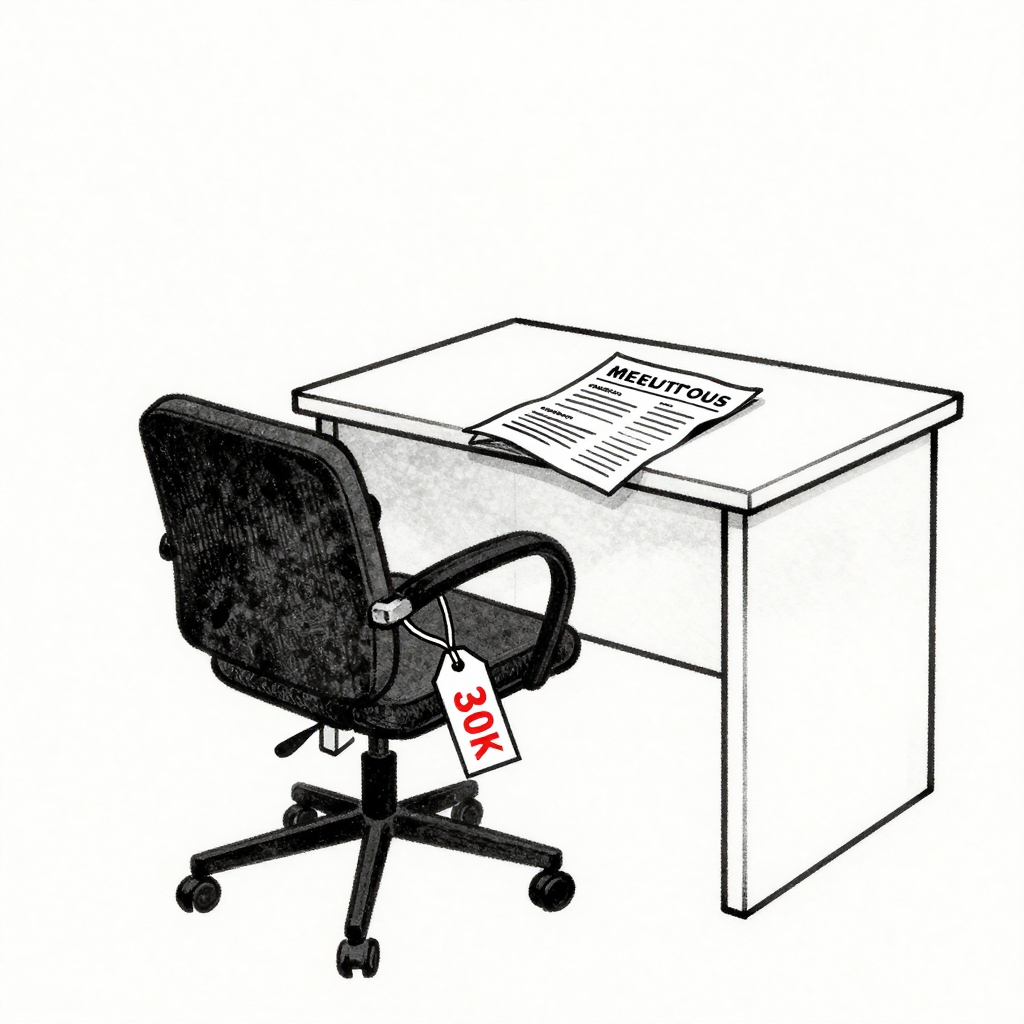
Bad hire cost me over $30K. Changed how I evaluate candidates permanently.
The top SaaS post of the day. A founder describes hiring someone with a great resume and confident interview who turned out to be unable to perform basic tasks. Between salary, training time, client damage control, and lost productivity, the total cost exceeded $30,000. Their new process: every serious candidate gets a paid trial project — five hours of real work, the actual kind of thing they would be doing daily, paid regardless of outcome. The thread drew nearly 100 comments debating the ethics and effectiveness of paid trial projects versus traditional interviews.
The key insight is paying for the trial. Free work assessments attract desperate people and repel the best candidates. Paying shows respect and filters for quality.
— WesternPotential2808134 pts
Five hours is a lot to ask. Consider that your best candidates are currently employed and their time is valuable. Two to three hours might get you 80% of the signal.
— DrShocker52 pts
References are useless — nobody lists someone who will say bad things. The only reliable signal is watching someone do the actual work.
— RevolutionaryPop727239 pts
First hire quit in three weeks. Exit interview was entirely about me.
A painfully honest post from a founder whose first employee resigned after three weeks and gave a devastating exit interview. The criticisms: contradictory instructions with frustration when employees did not know which to follow, claiming to want autonomy while micromanaging every decision, communicating goals without context, and treating every question as an interruption instead of building proper onboarding. The founder admits everything was accurate. They spent six months building processes and documentation before hiring again — and the second attempt worked.
The fact that you posted this publicly takes guts. Most founders blame the hire. The self-awareness here is rare and worth more than any management course.
— spaffage96 pts
Every solo founder goes through this. You have been the only decision-maker for years and suddenly you have to explain your thinking to someone else. It is genuinely hard.
— skydiver1957 pts
Customer vibe-coded a replacement for our product. Came back six months later.
A SaaS founder describes losing a customer whose engineering lead used AI coding tools to build an internal replacement handling about 60 percent of their product's functionality. Six months later, the customer signed back up at a higher tier. The internal tool worked for basics but nobody maintained it. When requirements changed, nobody updated it. The person who built it could not fully explain parts of the codebase because the AI had generated code they did not deeply understand. Building something and maintaining something are completely different skills, and vibe-coded tools tend to have a sharp expiration date.
This is the best argument for SaaS I have ever read. The product is not the code — it is the ongoing maintenance, updates, and support that nobody wants to do themselves.
— kubrador24 pts
Every enterprise customer who threatens to build in-house comes back eventually. The question is whether you will still be around when they do.
— Founder-Awesome15 pts
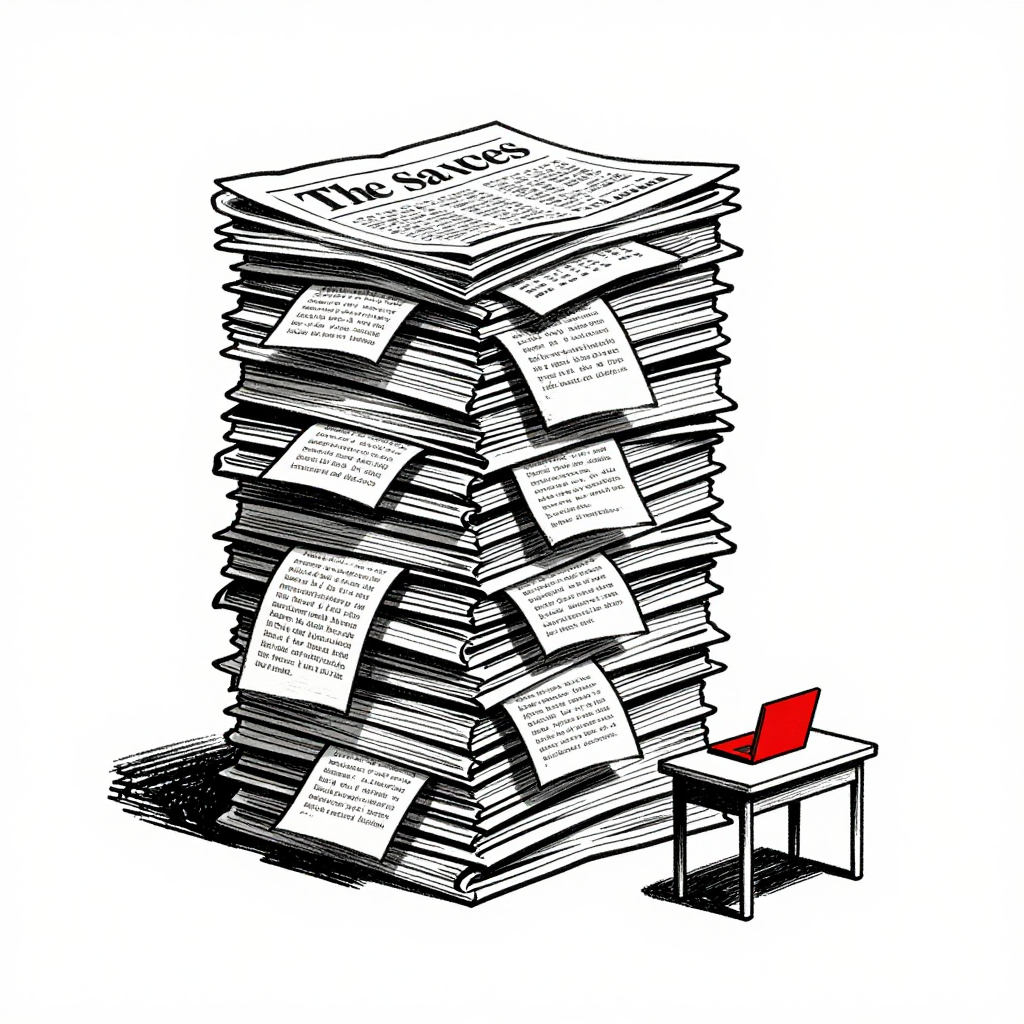
Is it just me or is marketing becoming 90% deck-making and 10% actually marketing?
A frustrated marketer vents about the state of the profession: their boss demands '50,000-foot strategy views' while wondering why campaign engagement is poor, apparently not connecting the two. The team spent four days on a PowerPoint instead of examining the actual copy. The post resonated broadly — marketers across agencies confirm they have become 'professional slide-deck creators' while the real work of understanding algorithms, crafting authentic content, and connecting with audiences gets deprioritized. The thread surfaces a growing divide between marketing leadership focused on optics and practitioners who understand the ground-level reality.
The deck is the deliverable now. Nobody measures whether the strategy in the deck actually worked. They just measure whether the client liked the deck.
— Zack9O611 pts
If you are spending more time presenting work than doing work, the incentive structure is broken. Full stop.
— gamersecret28 pts
What should I focus on studying to become a solid digital marketer?
A beginner trying to build practical digital marketing skills instead of collecting certificates asked the community for guidance on what to prioritize. The thread delivered unusually specific advice: start with one channel and master it before expanding, learn analytics before creative, understand the business model of whatever you are marketing, and run real campaigns with real money — even small amounts — as early as possible. Several experienced marketers emphasized that copywriting and data analysis are the two skills that transfer across every channel and never become obsolete.
Learn Google Analytics and Google Ads first. Everything else is secondary. If you can read data and run paid campaigns, you will always have work.
— Otherwise-Ear95116 pts
The best marketers I know are not marketing experts. They are business experts who happen to use marketing channels. Understand the funnel.
— Smart-Total-70994 pts
How do you identify which digital marketing channel works best for a small business?
A practical thread on channel selection for budget-constrained small businesses. The 45 comments converged on a consistent framework: start by identifying where your customers already spend time, not which channel is trendiest. B2B almost always starts with LinkedIn or Google Ads. Local B2C starts with Google Maps and local SEO. Consumer brands start with the social platform matching their demographic. The universal advice: do not try to be everywhere at once. Master one channel, prove ROI, then expand.
Ask your existing customers how they found you. That single question tells you more than any marketing framework.
— Infinite_Potato6833 pts
Budget under $2K/month? Pick exactly one channel. Budget over $5K? You can test two. Anything else is spreading too thin to learn anything.
— crawlpatterns2 pts

Kierkegaard's 'leveling' and the danger of feeling compassion without acting
A Substack essay examining Kierkegaard's concept of 'leveling' — the process by which a society flattens all values and commitments into abstract, detached sentiments. The central argument is that modern culture enables a form of compassion that functions as an end in itself rather than a call to action. We scroll past suffering, feel something, and that feeling becomes sufficient. Kierkegaard warned that this creates a public sphere where everyone cares in general but nobody acts in particular, producing a kind of moral paralysis dressed up as sensitivity.
The social media scroll is the purest expression of Kierkegaard's leveling — infinite exposure to suffering with zero obligation to respond. We have industrialized passive compassion.
— lew_rong15 pts
Nature's Indifference: When Silence Speaks — Examining Laozi, Heidegger, Ibn Khaldun, and Jung
A cross-cultural philosophical essay arguing that modern attempts to moralize nature — through ecology, spirituality, or ethical narratives — repeat the same theistic impulse in new language. Even after the decline of traditional religion, we continue asking whether nature is 'telling us something,' whether it approves or condemns. Drawing on Laozi's concept of the Tao's indifference, Heidegger's critique of technological framing, Ibn Khaldun's cyclical view of civilization, and Jung's collective unconscious, the essay argues nature is fundamentally indifferent — neither cruel nor kind, neither moral nor immoral.
The ecological movement's biggest blind spot is precisely this projection of moral agency onto natural systems. Nature does not care about balance — we do.
— cadschloss3 pts
Ibn Khaldun is criminally underrepresented in these discussions. His framework for civilizational decay maps better onto modernity than most Western philosophy.
— IronicImbecile3 pts
We are already a minority in time
A meditative post that begins with a simple observation: most humans who ever lived are dead, making the currently living a statistical minority. The author narrows the frame progressively — from all living humans to those in one country, one city, one subway car — arriving at the realization that any specific gathering of people is an astronomically improbable convergence of timelines. The post is less rigorous philosophy and more existential poetry, but it generated thoughtful discussion about the relationship between contingency, meaning, and the weight we assign to shared moments.
We share this specific moment not because we chose it, but because an incomprehensible chain of causes placed us here simultaneously. The question is whether that demands something of us.
— Fun_Abies_26240 pts
Cardboard (YC W26)
Agentic video editor — describe edits in natural language, get a first cut
Perplexity Computer
Multi-agent AI workflow system bundling rival models into one interface
Bifrost
Open-source LLM gateway in Go — 700x faster than LiteLLM with 50MB RAM
Gemini 3.1 Pro and the Downfall of Benchmarks: Welcome to the Vibe Era of AI
Full breakdown of Gemini 3.1 Pro alongside Sonnet 4.6, exploring whether we have a new best model or simply the collapse of benchmarks as a meaningful way to measure machine intelligence. Features analysis from seven papers and posts, including a new Simple Bench record and discussion of why hallucination rates and agentic deployment metrics may matter more than traditional leaderboards.