Sunday, February 23, 2026

Artwork of the Day
In the deep where indigo remembers light,
amber currents trace what stars once said—
coral bones grow patient through the night,
each fractal branch a prayer left unread.
We are the glow between the dark and dead.
Faces of Grit

Santiago Ramon y Cajal
The artist who drew the invisible architecture of the mind
Google Restricts AI Subscribers for Using OpenClaw
Google has begun restricting accounts of AI Pro and Ultra subscribers who route API calls through OpenClaw, the open-source personal AI assistant framework. Users report account suspensions without warning, triggering a heated 292-comment thread on the Google AI developer forum. The restrictions appear to target OAuth-based integrations that exceed intended usage patterns. The backlash highlights growing tension between platform providers seeking to control API access and the burgeoning ecosystem of third-party AI agent tools that users have come to rely on for daily workflows.
Gemini 3.1 Pro Preview Tops AI Benchmark Index at Half the Cost
Google's Gemini 3.1 Pro Preview has taken the top spot on the Artificial Analysis Intelligence Index, scoring 57 points and leading in six of ten categories including agent-based coding and scientific reasoning. It sits four points ahead of Claude Opus 4.6 and six ahead of GPT-5.2. The cost story is equally striking: running the full benchmark suite costs $892 with Gemini versus $2,486 for Claude Opus 4.6. However, independent testing by The Decoder found Gemini's fact-checking performance significantly worse than rivals, verifying only about a quarter of statements tested.
Samsung Adds Perplexity to Galaxy AI Multi-Agent Ecosystem
Galaxy S26 users will be able to summon Perplexity alongside Bixby and Gemini by saying 'hey, Plex.' The integration gives Perplexity deep access to Samsung Notes, Clock, Gallery, Reminder, and Calendar. Samsung is positioning this as part of a broader 'multi-agent ecosystem' philosophy, acknowledging that different AI agents have different strengths. The move signals a shift away from single-assistant lock-in toward an OS-level agent marketplace where users pick the right tool for each task.
Google VP Warns Two Types of AI Startups May Not Survive
Google Cloud VP Darren Mowry has identified LLM wrappers and AI aggregators as the two categories of AI startups facing existential pressure. As foundational models improve and platform providers expand their native capabilities, thin-wrapper businesses face shrinking margins and limited differentiation. The warning comes as the AI startup landscape undergoes rapid consolidation, with companies that lack proprietary data, unique workflows, or deep vertical expertise finding it increasingly difficult to justify their existence.
Wikipedia Blacklists Archive.today After Alleged DDoS Attack
Wikipedia editors have voted to remove all links to Archive.today, a web archiving service linked more than 695,000 times across the encyclopedia. The decision follows allegations that Archive.today was connected to DDoS attacks against Wikipedia infrastructure. The move raises questions about the fragility of web preservation when archiving services and content platforms clash, potentially leaving hundreds of thousands of citation links broken across one of the internet's most important reference resources.
Raspberry Pi Stock Surges 42% on OpenClaw AI Hype
Raspberry Pi Holdings saw a record two-day rally of up to 42% after social media posts about using the tiny computers to run OpenClaw went viral, racking up millions of views. The Telegraph and Reuters both credited the surge to growing excitement around low-cost personal AI projects, though Reuters also noted a stock purchase by CEO Eben Upton. The spike illustrates how the intersection of affordable hardware and open-source AI tools is creating unexpected market movements in the consumer electronics space.
China's Brain-Computer Interface Industry Racing Ahead
China's BCI sector is rapidly moving from research to commercialization, driven by strong government policy support, expanding clinical trials, and surging investor interest. Companies like BrainCo, Gestala, and NeuroXess are pushing both invasive and non-invasive approaches, while ultrasound-based BCI represents a newer frontier. The acceleration positions China as a serious competitor to US-based Neuralink and Synchron in a field that could reshape how humans interact with technology.
Chris Lattner Reviews the Claude C Compiler: What It Reveals About AI-Assisted Programming
Chris Lattner, the creator of Swift, LLVM, and Clang, has published a detailed review of the C compiler built by parallel Claude instances on Opus 4.6. His verdict: CCC looks less like an experimental compiler and more like a competent textbook implementation, the sort of system a strong undergraduate team might build early in a project. However, several design choices reveal optimization toward passing tests rather than building general abstractions. Lattner identifies a deeper question about licensing and IP: if AI systems trained on publicly available code can reproduce familiar structures, where is the boundary between learning and copying? The review underscores that AI excels at assembling known techniques but struggles with the open-ended generalization required for production-quality systems.
The Great AI Hype Correction of 2025
MIT Technology Review has published a subscriber eBook examining how 2025 became a year of reckoning for AI. The central thesis: the heads of top AI companies made promises they could not keep, and the industry is now undergoing a painful recalibration of expectations. The four-chapter analysis covers why LLMs are not everything, why AI is not a quick fix for all problems, whether we are in a bubble, and why ChatGPT was neither the beginning nor the end. The work argues that meaningful AI deployment requires readjusting the gap between marketing narratives and engineering reality.
Anthropic Study Finds AI Agents Thrive in Software Dev but Barely Exist Elsewhere
Anthropic's own usage data reveals a stark reality about the current state of AI agents: the revolution is almost entirely limited to software engineering. Despite widespread hype about agents transforming every industry, the data shows minimal autonomous agent deployment outside of coding workflows. Even within software development, users are not letting agents work nearly as autonomously as the technology would allow, preferring to maintain tight human oversight. The findings challenge the narrative that general-purpose AI agents are imminent across all knowledge work.
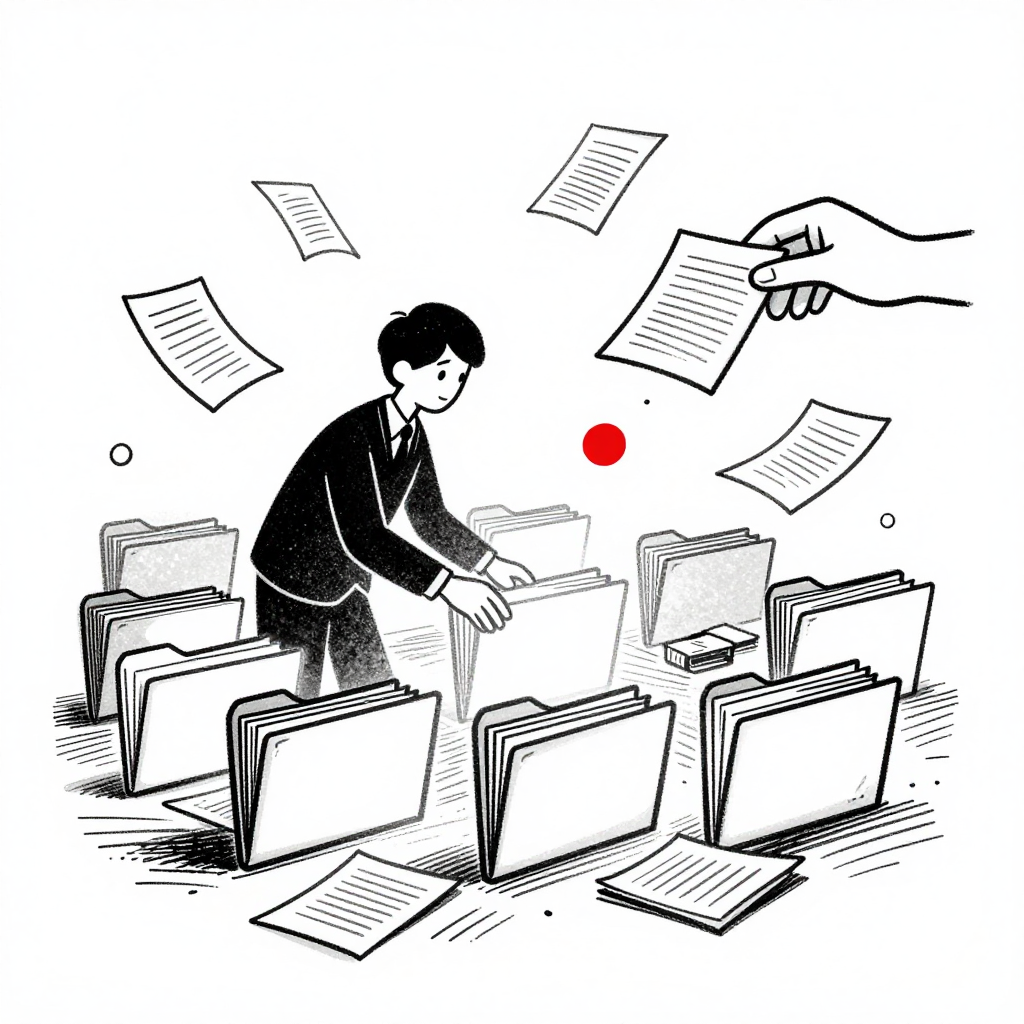
I stopped organizing files. My AI agent does it now — here's the tool I built
The author built claw-drive, an open-source CLI tool that lets an AI agent handle all file organization. You toss files at it via chat or email, the agent categorizes, names, tags, and writes rich descriptions, all stored in a JSONL index. It uses SHA-256 deduplication and defaults files to 'sensitive' if you don't respond to content-reading requests. The tool is framework-agnostic despite being built around OpenClaw, working with any agent that has shell access.
So any time you need to find a file or folder you have to ask where the AI put it? Cool work but that sounds like more work than just being organized.
— space_wiener14 pts
A lot of the work spent organizing files and folders is useful to set and preserve a mental map of my activities. I don't think I'd want this tool, just like I don't want an LLM to write my design documents.
— thbb5 pts
Fair point. But for people like me who never get around to organizing receipts and vet records, the alternative isn't a well-maintained folder hierarchy. It's chaos.
— Witty_Opportunity2542 pts
Why most agents fail isn't the tech — it's the constraint nobody designs for
A developer shipped an AI customer support agent that worked perfectly in testing, then watched it slowly erode customer trust in production. The critical insight: 99% accuracy sounds good, but one confidently wrong answer about pricing triggered a public complaint that poisoned trust in all future agent responses. Now every response gets manually reviewed, defeating the purpose entirely. The post argues agents borrow human trust, and trust equals consistency plus recovery plus accountability, not just accuracy.
The answer is to make your system more deterministic. Put safeguards like 'always check the price you quote is in our price list' on top of another LLM call to vet the response.
— westoque4 pts
Treat those zones as 'needs a receipt' with citation or handoff, plus track repair signals like re-opened tickets and percentage of human rewrites.
— South-Opening-97201 pts
Thinking of shifting to AI Security from full-stack Agentic AI engineering
A senior self-taught AI engineer in New Zealand is considering a career pivot to AI security, noting a surge in insecure AI systems from vibe coding: prompt injection risks, exposed API keys, unsafe tool execution, and unvalidated outputs. The thread splits between encouragement and skepticism. The most substantive response argues you cannot specialize in agentic AI security alone; you must be a security generalist who also covers AI, understanding databases, IAM, and enterprise security end-to-end.
Agentic security must be understood in the wider context of overall security. You cannot just be a specialist in agentic AI security — you must be a security specialist who also covers agentic AI.
— fabkosta2 pts
Excellent and on-time idea to switch to AI agents security.
— Jaded-Chard14762 pts
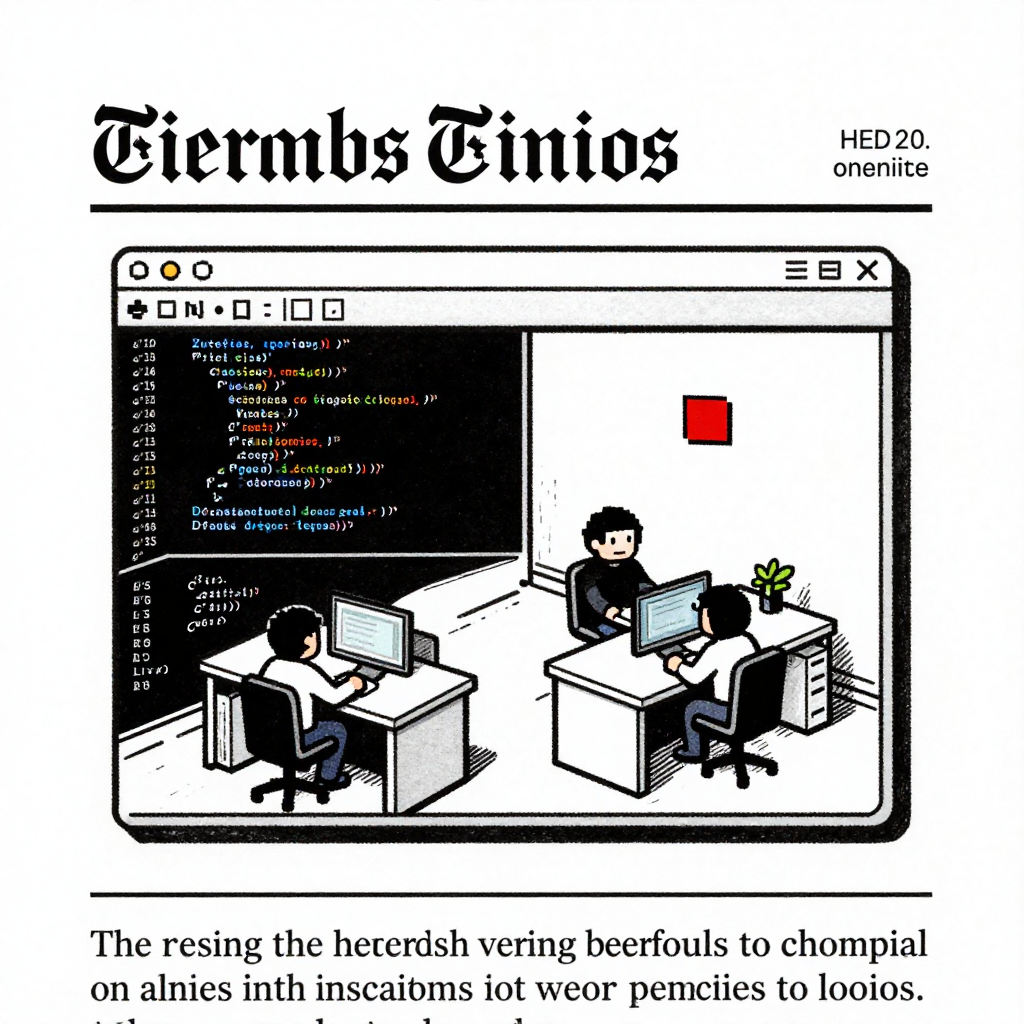
I built a VS Code extension that turns your Claude Code agents into pixel art characters working in a little office
The day's biggest post by far. A developer built an open-source VS Code extension that visualizes each Claude Code agent as an animated pixel art character in a virtual office. Characters walk around, sit at desks, and spawn sub-agent animations. Rather than forking Claude Code, it cleverly tails the existing JSONL transcript files to track agent state. The author argues the future of agentic UIs might look more like a videogame than an IDE, citing AI Town as inspiration for representing agents in physical space.
Watching multiple agents as little 'coworkers' feels way easier to reason about than a pile of terminals. Curious if you've thought about exposing an API so other agent runners can push state into the same office view.
— Otherwise_Wave937426 pts
First showcase which is awesome and open-sourced. If you add skins later I may buy some. 10/10. But I'm on PyCharm.
— raiffuvar7 pts
The JSONL transcript tailing approach is super clever. Feature request: it would be great to see which files the agent is currently editing, like a little paper icon with the filename on the desk.
— dayner_dev5 pts
Is Claude actually writing better code than most of us?
A developer tested Claude on real-world tasks — refactors, edge cases, architecture suggestions, messy legacy code — and found the output often cleaner and more defensive than production repos they've worked in. The 239-comment thread is surprisingly nuanced. The top-voted substantive response argues that while a single senior dev working start to end produces cleaner code, the reality of enterprise codebases built by multiple people over years with changing leadership and small budgets produces code far worse than what Claude generates. The counterpoint: Claude sometimes writes overly defensive code, checking for nulls even where they're impossible.
I've seen so many shitty enterprise codebases. Multiple people, over the years, crappy docs, changing leadership, small budgets without testing gets you WORSE code than any Claude Code instance. Even my crappy side projects now include full CI/CD and testing suites.
— indutrajeev179 pts
It is certainly better than us at writing git commit messages.
— DeepCitation335 pts
Sometimes Claude writes code that is overly defensive, making it hard to read. Checking for nulls even when it isn't necessarily possible.
— DapperCam26 pts
My actual real Claude Code setup that 2x my results
A developer building a SaaS with Claude Code shares the practical setup that doubled their output. The key insight: CLAUDE.md works early on but gets ignored once the context window fills up. The author switched to hooks, specifically a UserPromptSubmit hook that injects fresh system context before each message. They chain domain-specific 'specialist agents' triggered by keyword detection — a security agent activates on JWT/XSS mentions, a billing agent for payment flows. Comments note the keyword-trigger approach may be too narrow for production systems with compliance requirements.
The keyword triggers for the security agent are JWT, OWASP, vulnerability, XSS and auth. For production systems with compliance and hundreds of pages of requirements, this approach likely won't be very helpful.
— LachException6 pts
Have you experimented with moving code review from write/edit to git commits instead? It might reduce token use if you refactor sets of files at a time.
— Comfortable-Ad-67401 pts
After building MVPs for 30 startups, I realized most founders are just hiding from the market
A freelance developer who built MVPs for over 30 founders shares the uncomfortable pattern: the vast majority are not building a business but a 'safe room.' They spend months perfecting tech stacks, landing pages, and waitlists because as long as they are preparing, they cannot be rejected. The market is entirely indifferent to effort — it only responds to utility. The survivors were the founders who talked to potential customers before writing a single line of code and treated the MVP as a conversation starter, not a product launch.
The difference between a founder and a hobby is literally just asking someone for money. Everything else is just expensive procrastination with a GitHub repo.
— kubrador40 pts
Most of the founders you built for probably failed because they hired a freelancer to build their MVP instead of talking to customers first. You kinda proved your own point by being the guy they paid to help them hide.
— mochrara4 pts
Design, experience, brand, service, vision, monetization, positioning, sales, marketing aren't included in the code output of LLM/vibe coding tools.
— Global-Complaint-48234 pts
Founders who actually made serious money — how did you really get the idea?
Cutting past the polished podcast narratives, this thread asked for raw origin stories. The most upvoted real founder built a blog commenting scraper in 2011 that evolved into No Hands SEO and then Domain Hunter Gatherer, turning over a couple million dollars and serving 50,000 customers. The consensus pattern: successful ideas rarely arrive as lightning strikes. They emerge from pattern recognition after sitting close to a problem for a long time, combined with obsession, timing, and willingness to execute when others hesitate.
I started wanting to make backlinks in 2011, built a simple scraper, then a browser tool, then No Hands SEO, then Domain Hunter Gatherer. Turned over a couple mil serving 50k customers. I basically created a tiny app that served one purpose and expanded its scope.
— AppointmentTop394812 pts
It's rarely about one 'aha!' moment. More often it's the hundredth attempt after 99 failures. You learn so much from each flop that eventually you stumble onto something that sticks.
— idea_hunt8 pts
Is SaaS really dead?
The recurring existential question got a 71-comment treatment. The original poster acknowledges that Claude Code can help a senior engineer recreate most products in 2-3 weeks, but argues the real edge remains in managing customer needs, sales pipelines, and support as needs evolve. The thread's best response — 'Are restaurants dead because you can cook at home?' — earned 97 upvotes. The consensus: 90% of SaaS won't survive, but the moat was never code. It was always distribution, customer trust, and the boring operational work that vibe coding cannot automate.
Are restaurants dead because you can cook at home?
— bapuc97 pts
90% of SaaS won't survive. Most vibe coded SaaS is vapourware. Growing a business takes a lot more than coding software.
— Global-Complaint-48234 pts
The bar for good SaaS is just getting higher. But we will still run into issues with governance, maintenance, and shadow IT especially in enterprise territory.
— BroatEnthusiast5 pts
What's your real 'yes/no' signal when selecting influencers?
A developer built a prototype browser extension showing creator performance insights inline, but wanted to know what actually drives influencer selection decisions inside marketing teams. The thread produced a clear consensus: engagement rate and follower count are both unreliable due to widespread fakery. The real signal is audience alignment plus buying intent — do the creator's followers actually ask questions, follow recommendations, and sound like buyers? One commenter's honest take: 'We just ask would I actually buy what this person's selling, then check if their audience comments like real humans and not fire-emoji spam bots.'
My yes/no signal is audience fit and proof of influence. High views mean nothing. Does this creator's audience already think about, talk about, or buy what we're selling?
— yemelian0v1 pts
Engagement rate is fake, follower count is fake, so we just ask 'would I actually buy what this person's selling or do they feel like a bot?' Everything else is us pretending we have a process.
— kubrador1 pts
What's the industry standard for monthly client reporting?
A new marketing agency owner asked what 'industry standard' looks like for monthly reporting across Google Ads, GA4, and Meta. The thread became a practical masterclass. A 12-year veteran warned against plug-and-play dashboards with too many secondary metrics, explaining that exposing irrelevant KPIs like CPC leads clients to question things out of context instead of focusing on growth. The best advice: good dashboards are simple, connect spend to key KPIs, use more graphs than tables, and most importantly, tell the story of what worked, what didn't, and what happens next.
Many agencies with single plug-and-play dashboarding solutions end up with too many secondary metrics. You don't want clients scrutinizing minutia. If CPC isn't core to their success, leave it off or you'll end up debating CPC instead of growing sales.
— Zitronensaft1236 pts
Numbers are great, but customers need insights. What worked, what didn't, what you tried, what you learned, and what you'll try next month. Numbers don't tell the story of WHY.
— ernosem3 pts
How would you scale a 1M-user social platform's new ad network?
The founder of a social media platform with 1 million monthly active users is about to launch a Meta-like ad system supporting CPM and CPC, starting with a few marketing agency partners. The most valuable response was a reality check: having users and having sellable ad inventory are very different things. Agencies will test it, see performance that can't compete with Meta and Google's targeting, and quietly leave. The advice: figure out your unfair advantage beyond just 'we have users' before burning through partnership goodwill.
1M users and actual ad inventory are two very different things. Agencies will test it, see terrible performance, then ghost you. Figure out why anyone would pick you over established platforms.
— kubrador2 pts
Start with a few clear success stories from early agencies. Show CPM, CTR, and conversions so buyers see real outcomes. If agencies make money, they will bring the next clients for you.
— gamersecret22 pts

Post-Futurism: The Age of the Hinge
An essay arguing we spent a century racing toward the future, and now that it's here, the people who built it are walking away while the rest of us stand at the threshold unsure whether to step through. The piece claims the AI pendulum grew faster than any before it — social media took a decade to reshape public discourse, while AI reached that threshold in two years. The most substantive comment pushed back, arguing the only realistic 'post-futurism' is disillusionment with futurists driving global transformations: where economic shifts require dismantling society's safeguards, we are encouraged to believe we are transforming, but a society that profits from dismantling itself cannot become self-sustaining.
The only post-futurism I can realistically believe in is one where we become disillusioned of these futurists trying to drive global transformations. How can a society that profits off dismantling itself ever become self-sustaining?
— AConcernedCoder3 pts
More like the age of cringe.
— LordDiplocaulus4 pts
Rawlsian fairness isn't really fair: A take on the tolerance paradox
A post challenging Rawls's veil of ignorance by arguing it must contain built-in unfairness to function — if we could be a pyromaniac behind the veil, perfect fairness would require tolerating destructive desires equally. The strongest rebuttal argued that any steelman of the veil would have us know what it is like to be both the pyromaniac and their victim. Since there is nothing that is like being the victim of queerness but something very real about being the victim of a pyromaniac, the veil naturally produces differential outcomes. The veil of ignorance, properly understood, is not about equal power but about choosing societal structures based on accurate and universal empathy.
The veil of ignorance seems to me basically a state of perfectly accurate universal empathy. It doesn't suggest we should give pyromaniacs equal power. Only that we should choose societal structures based on accurate and equal understanding.
— Tioben3 pts
This critique misses the point. Rawls is not assuming perfect fairness is possible but is concerned with maximizing fairness. Behind the veil, we know we're more likely to be the majority, so we protect the majority while harming the minority as little as possible.
— Rethious1 pts
Timeframe
Family e-paper dashboard for schedules, weather, and shared notes
WARN Firehose
Every US layoff notice in one searchable database
Loops
A federated, open-source TikTok alternative
Adobe and NVIDIA's New Tech Shouldn't Be Real Time. But It Is.
A breakdown of new real-time rendering research from Adobe and NVIDIA for glinty, sparkling material surfaces. The technique achieves real-time performance for effects that previously required expensive offline computation, with implications for game engines and visual effects pipelines.
The Most Realistic Fire Simulation Ever
Coverage of a new fire simulation paper that achieves unprecedented realism in flame behavior, turbulence, and light interaction. The technique pushes the boundaries of what's possible in physics-based visual effects.
Gemini 3.1 Pro and the Downfall of Benchmarks: Welcome to the Vibe Era of AI
A deep analysis of Gemini 3.1 Pro's benchmark performance alongside broader questions about whether benchmarks can still meaningfully capture AI capability. Features analysis from seven papers and posts, covers the new Simple Bench record, and examines Anthropic's data on where AI agents are actually deployed.