Sunday, February 22, 2026
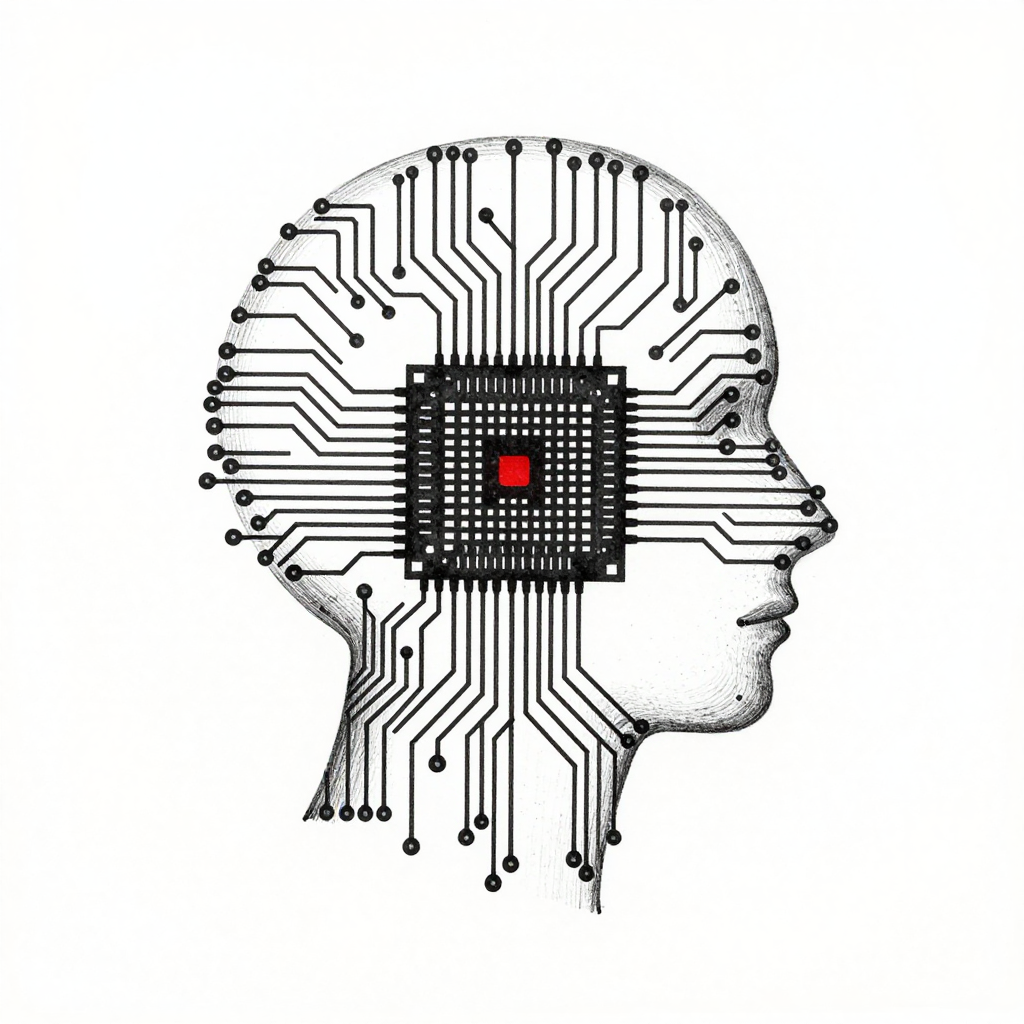
Artwork of the Day
The circuit hums a question
no one asked aloud —
what shape does thought take
when the thinker
is the thought itself?
Faces of Grit

Ada Lovelace
The first to see what machines could become
Google's Gemini 3.1 Pro Preview tops AI benchmark index at less than half the cost
Google's Gemini 3.1 Pro Preview has taken the top spot on the Artificial Analysis Intelligence Index, scoring 57 points — four ahead of Anthropic's Claude Opus 4.6 and six ahead of GPT-5.2. The model ranks first in six of ten categories, including agent-based coding, knowledge, and scientific reasoning. Running the full index costs $892, compared to $2,304 for GPT-5.2 and $2,486 for Claude Opus 4.6. Its hallucination rate dropped 38 percentage points from the previous Gemini generation. However, on real-world agent tasks it still falls behind Claude Sonnet 4.6 and Opus 4.6, and independent fact-checking tests show significant weaknesses.
Nvidia reportedly set to invest $30 billion in OpenAI
Nvidia is close to investing $30 billion in OpenAI as part of a funding round aiming to raise over $100 billion total, valuing the ChatGPT maker at roughly $830 billion. SoftBank and Amazon are also expected to participate. The investment replaces a September deal in which Nvidia was to provide up to $100 billion for chip usage in data centers. OpenAI plans to spend a significant portion of the capital on Nvidia chips needed to train and run its AI models. If completed, this would be one of the largest private fundraises in history.
NASA hauls Artemis II rocket back to hangar for repairs
A day after expressing optimism about a March launch, NASA announced that the Artemis II rocket must be rolled back from the launch pad to the Vehicle Assembly Building for repairs. Data showed an interruption in helium flow to the upper stage of the Space Launch System rocket. The 322-foot-tall SLS will ride NASA's crawler-transporter for the 4-mile journey back. Administrator Jared Isaacman confirmed the fix can only be performed inside the VAB. The setback adds further delays to the long-troubled Moon mission program.
OpenAI staff debated alerting police about violent ChatGPT logs before school shooting
Jesse Van Rootselaar, suspect in the Tumbler Ridge school shooting in British Columbia, had conversations with ChatGPT involving gun violence descriptions months before the attack. The logs triggered OpenAI's automated review system, and about a dozen employees debated internally whether to alert Canadian police. Management ultimately decided against it. The case exposes a difficult dilemma for AI companies about when and whether to break user privacy to report potential violence. It mirrors broader questions the entire tech industry faces about proactive intervention.
Llama 3.1 70B running on a single RTX 3090 via NVMe-to-GPU bypass
A developer built a system that runs Meta's Llama 3.1 70B model on a single consumer RTX 3090 by connecting the GPU directly to NVMe storage, completely bypassing the CPU and system RAM. The project, called ntransformer, emerged from retrogaming experiments and weekend vibe-coding. While performance is better suited to professional GPUs, it demonstrates that consumer hardware can handle models far beyond their VRAM capacity through creative memory management. The project has attracted significant interest on Hacker News with 123 points and active discussion.
Google VP warns two types of AI startups may not survive
A Google Cloud VP has warned that LLM wrappers and AI aggregators face mounting pressure as generative AI evolves. These startups face shrinking margins and limited differentiation as foundational model providers expand their own capabilities. The warning suggests that startups built primarily on API calls to third-party models without deep proprietary value may struggle to survive. Companies that merely aggregate or reskin existing AI capabilities are particularly vulnerable as the underlying platforms eat into their feature sets.
Apple iOS 26.4 public beta arrives with AI playlists and encrypted RCS
Apple has released the iOS 26.4 public beta with several notable features. The headline addition is an AI-powered playlist generation tool in Apple Music that creates custom playlists from natural language prompts. The update also brings video content support to the Podcasts app and, crucially, end-to-end encryption for RCS messages — finally bringing security parity to cross-platform messaging. These features represent Apple's continued integration of AI into core apps while addressing long-standing interoperability concerns.
How far back in time can you understand English?
This deep dive explores the evolution of the English language by walking readers backward through centuries, testing comprehension at each stage. The piece examines how Old English is functionally a different language, Middle English is partially intelligible, and Early Modern English (Shakespeare-era) remains mostly accessible. The article attracted 389 points and 229 comments on Hacker News, with discussions ranging from the Great Vowel Shift to how written versus spoken comprehension diverge dramatically. It challenges assumptions about linguistic continuity and demonstrates how rapidly language can become unrecognizable.
Microsoft's blueprint for proving what's real online
Microsoft's AI safety research team has evaluated how current methods for documenting digital manipulation hold up against modern threats like interactive deepfakes and hyperrealistic AI models. The team published a blueprint recommending technical standards for AI companies and social media platforms to adopt. The framework addresses the growing challenge of distinguishing authentic content from AI-generated material as generative tools become more accessible. It comes at a time when AI-enabled deception permeates social media feeds, from high-profile fakes to subtler manipulations that quietly rack up views.
Andrej Karpathy on 'Claws' — the new AI agent category
Andrej Karpathy coined yet another term for the AI lexicon: 'Claws' — referring to the emerging category of OpenClaw-like personal AI agent systems that run on personal hardware, communicate via messaging protocols, and handle both direct instructions and scheduled tasks. Karpathy praised the concept while noting security concerns with running OpenClaw specifically, pointing to alternatives like NanoClaw (containers, 4000 lines of code) and ZeroClaw (Rust, sub-10ms startup). Simon Willison argues the term is sticking, noting Karpathy's track record with 'vibe coding' and 'agentic engineering.' The post highlights how personal AI agents are becoming a recognized computing paradigm.

I set up an AI phone receptionist for my friend's real estate business. The results genuinely surprised me
A developer set up an AI voice receptionist for a solo real estate agent who was constantly missing calls during property showings. After 30 days, the AI answered calls in under 2 seconds, asked qualifying questions, and booked appointments directly into Google Calendar. One of those AI-booked appointments turned into a closed deal. The most striking detail: callers genuinely could not tell it was AI, with one person complimenting 'your receptionist Sarah' at a viewing. The project took a weekend of trial and error to get working.
This is the kind of practical AI use case that actually moves the needle — not another chatbot, but something that directly recovers lost revenue.
— HarjjotSinghh34 pts
The real test is what happens when the AI encounters an edge case it wasn't trained for. One bad call could undo all the trust.
— Pantheonof15 pts
50+ OpenClaw alternatives for business
With OpenClaw gaining mainstream traction, a user compiled an extensive list of alternatives and forks optimized for business use. The roundup includes NanoClaw (container-based, WhatsApp integration, built on Anthropic's Agents SDK), Nanobot (ultra-lightweight at 4,000 lines of Python), ZeroClaw (Rust-based, sub-10ms startup, 3.4MB binary), TrustClaw (OAuth and sandboxed execution with 1,000+ tools), and PicoClaw (minimal fork focused on speed). The post highlights how the personal AI agent space has exploded into a full ecosystem with specialized tools for different security, deployment, and integration needs.
The fact that there are already 50+ alternatives tells you this category is real. The question is which ones will still exist in six months.
— Katamaraan8 pts
NanoClaw's container approach is the right call for business. Running a personal agent with full system access on a company machine is a non-starter.
— HarjjotSinghh5 pts
AI agents aren't replacing jobs — they're replacing task layers inside jobs
Based on production observations, the poster argues AI agents are eating repetitive task layers within roles rather than eliminating entire positions. Follow-up sequences, calendar coordination, CRM updates, internal status reporting, and basic ticket resolution — representing 20-50% of some roles — are being automated. Companies aren't firing teams; they're freezing hiring and increasing output per person. The shift is from 5 people doing repetitive coordination to 2 people supervising 10 agents.
The hiring freeze pattern is exactly what we're seeing. Nobody announces 'we replaced people with AI' — they just don't backfill when someone leaves.
— PandakatFinance9 pts
The 'supervising agents' skill set is completely different from doing the tasks manually. Companies that don't retrain are going to lose their best people.
— k76324 pts
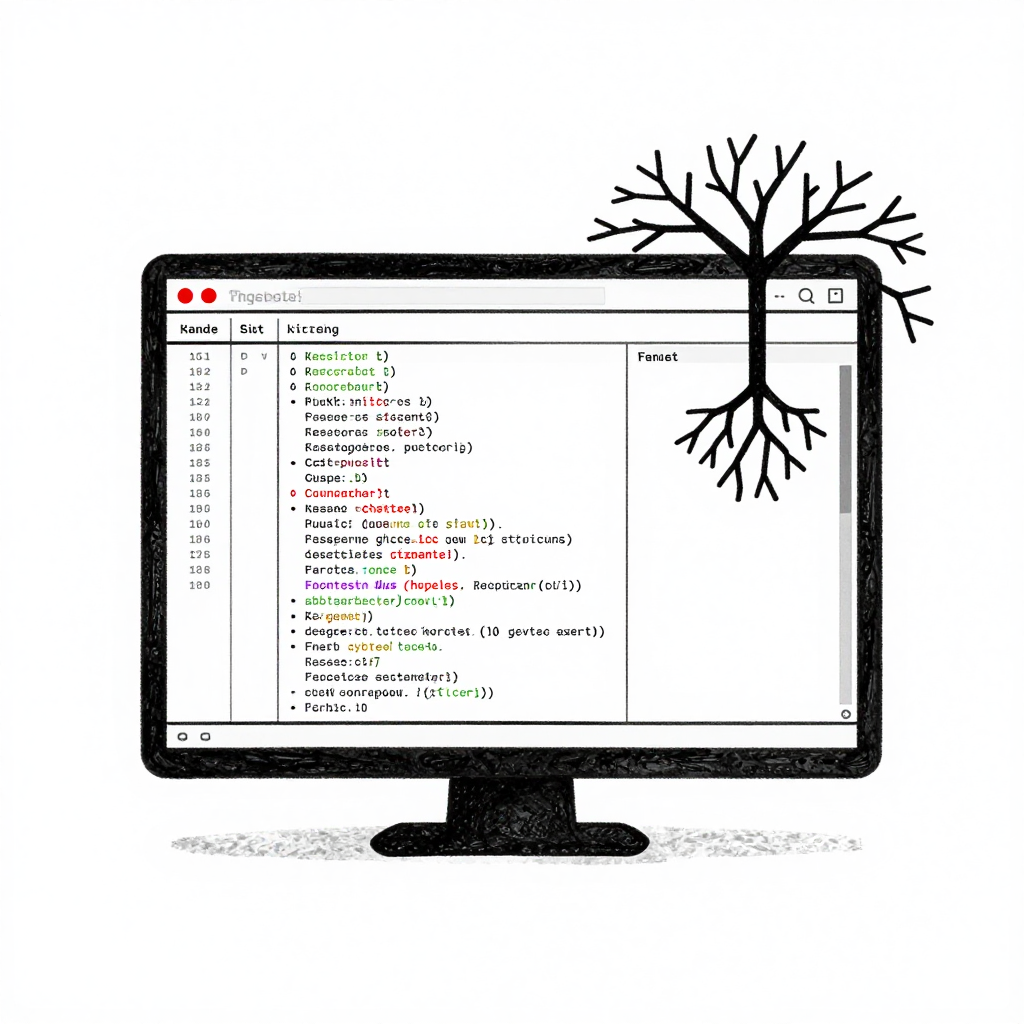
Steal this library of 1000+ Pro UI components copyable as prompts
The top post of the day is a curated library of UI components inspired by top websites that can be copied directly as prompts for Claude Code or any other AI coding tool. The library covers landing pages, business websites, and more at landinghero.ai/library. It represents a growing trend of prompt-optimized design resources — rather than traditional component libraries with code, these are structured as natural language descriptions that AI tools can interpret and implement directly.
This is the future of design systems — not Figma files or npm packages, but prompt libraries that any AI tool can consume and adapt.
— Ok_Mechanic80632 pts
Bookmarked instantly. The landing page designs are especially useful because they're the hardest to get right with AI alone.
— TEHGOURDGOAT8 pts
ACCELERATION: it's not how fast something is moving, it's how fast it's getting faster
A thought-provoking discussion about the pace of change in AI-assisted development frameworks. The poster argues the real challenge isn't keeping up with any single tool — it's that the rate of change itself is accelerating. Every decision about which framework or tool to adopt carries growing opportunity costs because something better arrives before you've finished learning the current one. The thread reflects widespread anxiety in the developer community about making durable technology choices in an era of exponential tooling churn.
The best framework is the one you already know. Stop chasing and start shipping.
— MeButItsRandom49 pts
This isn't just about frameworks. It's about the cognitive load of decision-making when every choice has a shorter half-life than the last.
— gecike12 pts
Autonomous multi-session AI coding in the terminal
A developer built agtx, a kanban-style terminal application for managing autonomous AI coding sessions. It integrates with Claude Code and features a workflow moving tasks through Backlog, Planning, Running, Review, and Done stages. Each task gets its own git worktree and tmux window for isolation. The tool supports automatic session management with resume capability, AI-generated PR descriptions, and a multi-project dashboard. It represents the growing trend of building management layers on top of AI coding agents.
The git worktree isolation is the key insight here. Without it, parallel AI sessions step on each other constantly.
— Necessary-Spare1818 pts
This is essentially a project manager for AI workers. We've come full circle — now we need management tools for our tools.
— pancomputationalist5 pts
I built a SaaS to escape my 9-5... now I work 24/7
A brutally honest confession from a founder who quit their job to build a SaaS with the goal of working less. Three years later, they work 16-hour days, eat McDonald's at 3AM because they don't have time to cook, and still haven't made a dollar. The post serves as a cautionary tale about the romanticized narrative of indie SaaS building. The comments are a mix of tough love and genuine advice, with many pointing out that three years without revenue is a signal to pivot or validate differently, not to keep grinding.
Three years and zero revenue means you're building something nobody asked for. Talk to customers before writing another line of code.
— PossibleFirm709542 pts
The '9-to-5 escape' fantasy is the most dangerous lie in tech. You're not escaping work — you're removing the guardrails around it.
— richincleve15 pts
How I got my SaaS to $50k ARR in a few months
A founder shares the playbook behind reaching $50k ARR with an SEO tool, arguing that building the product is only 30% of the work while distribution is 70%. The key tactics: indirect DMs asking 'Do you know someone who could use this?' (which avoids the hard sell), consistent posting even to small audiences, and focusing on organic channels. The post includes Stripe proof and resonated because it's specific and actionable rather than theoretical. The approach favors warm referral loops over cold outreach or paid acquisition.
The 'do you know someone' DM is genius because it removes the pressure from the conversation. Nobody feels sold to.
— Bartfeels244 pts
Consistent posting works but it takes 6-12 months before you see compounding. Most people quit at month 2.
— AlizaCodes4 pts
Update from the guy who quit his job 4 months ago — what actually happened
A follow-up from a founder who posted four months ago about quitting their job to build a startup. Starting from zero users and zero revenue with nothing but an idea and self-doubt, they've reached $300 MRR — entirely organic with no ads or formal marketing. The post resonates because it's honest about the modest numbers rather than inflating success. The comments are supportive, with experienced founders emphasizing that $300 MRR from organic growth is a stronger signal than $3,000 from paid ads.
300 MRR organic is better than 3k MRR from burning money on ads. You've got actual product-market fit signal.
— Anantha_datta6 pts
The honesty here is refreshing. Most posts in this sub are either '$0 to $100k' humble-brags or 'why is nobody buying my thing.'
— andrew-ooo4 pts
Unpopular opinion: Most 'digital marketing gurus' on LinkedIn are actively making your marketing worse
A marketer argues that viral LinkedIn advice — 'post 3x a day,' 'hooks are everything,' 'go viral or go home' — is optimized for getting the guru engagement, not for producing business results. Real marketing, they contend, is boring: testing, iterating, reading data, and repeating. The best marketers they know have almost no social presence because they're too busy doing actual work. The post highlights the growing tension between performative marketing content and effective marketing practice.
The irony is that this 'unpopular opinion' is actually the majority opinion among working marketers. It's only unpopular on LinkedIn.
— EmotionalSupportDoll3 pts
Following guru advice is like learning to cook from people who only post plating photos. The real skill is in the boring prep work.
— gamersecret23 pts
How can I measure email marketing ROI effectively?
A practitioner running email campaigns can see open rates and clicks but struggles to connect them to actual revenue. The thread produced practical advice: set up UTM parameters for every link, use platform-native attribution windows, implement proper conversion tracking with unique coupon codes per campaign, and track cohort-level revenue rather than individual email performance. The consensus is that email attribution will always be imperfect, but revenue-per-subscriber and customer lifetime value by acquisition source are the metrics that matter most.
Revenue per subscriber is the only email metric that matters. Everything else is a vanity number that makes you feel productive.
— crawlpatterns3 pts
Unique coupon codes per campaign. It's old school but it's the most reliable attribution method when your stack is basic.
— dekker-fraser2 pts
35, burned out and stuck in a loop — anyone been through something similar?
A deeply personal post from a 35-year-old digital marketer dealing with burnout, depression, ADHD, and chronic feelings of inadequacy. They describe working on 'what feels like 73,298 things at once' but nothing ever getting finished. Despite teaching themselves WordPress, SEO, and affiliate marketing, the cycle of starting and abandoning projects repeats. The 31-comment thread is unexpectedly compassionate, with practical advice about getting ADHD medication, starting with one project at a time, and the importance of shipping something imperfect over perfecting something forever.
ADHD medication was the single biggest unlock for me. Not a silver bullet, but it turned my 73,000 tabs into 5 manageable ones.
— ChocolateMundane62864 pts
Ship one thing. Not the best thing, not the right thing. Just one thing. Completion builds momentum that planning never can.
— Radiant-Security-3474 pts

How AI reflects Baudrillard's Simulacra and the Hyperreal
A New York Journal of Philosophy article examining AI through Jean Baudrillard's theory of simulacra — the idea that representations can become more real than the reality they reference. The piece argues that AI-generated content is the ultimate simulacrum: it produces outputs that reference patterns in human-created data but have no original referent. As AI content floods the internet and is used to train future models, we approach what Baudrillard called the 'hyperreal' — a state where the copy has no original, and the distinction between real and simulated collapses entirely.
The recursion is the key point — AI trained on AI output is Baudrillard's nightmare realized. Each generation moves further from any human ground truth.
— Independent_Term_6643 pts
Dualism harms the dualist physically and psychologically
Part four of a Substack series on varieties of dualism, this essay argues that mind-body dualism doesn't just produce philosophical confusion — it causes measurable harm to the person who holds the belief. The author contends that treating mind and body as separate substances leads to neglect of physical health in favor of 'mental' pursuits, dissociation during physical experiences, and a fractured sense of self. The 14 comments feature a lively debate about whether the argument conflates philosophical dualism with folk psychological dualism, and whether the harms described are caused by dualism itself or by specific cultural expressions of it.
The strongest version of this argument is about embodied cognition — people who identify as 'minds piloting bodies' make systematically worse decisions about their physical wellbeing.
— U-Knighted16 pts
This conflates 'believing in dualism' with 'practicing asceticism.' Plenty of dualists treat their bodies well. The harm comes from specific cultural practices, not the metaphysics.
— ASpiralKnight17 pts
zclaw
Personal AI assistant in under 888 KB, running on an ESP32
The Most Realistic Fire Simulation Ever
A new research paper presents what may be the most photorealistic fire simulation to date, capturing the complex fluid dynamics, light emission, and turbulent behavior of real flames with unprecedented fidelity.
Gemini 3.1 Pro and the Downfall of Benchmarks: Welcome to the Vibe Era of AI
A deep analysis of whether Gemini 3.1 Pro is truly the best AI model or whether benchmarks themselves are failing to capture meaningful intelligence. Features analysis from seven papers and posts, plus a new Simple Bench record.