Tuesday, February 18, 2026

Artwork of the Day
Beneath the surface, constellations bloom,
where indigo dissolves the weight of night.
Each phosphor trail, a whisper in the gloom,
reminds us darkness carries its own light.
The ocean hums what stars forgot to say.
Faces of Grit

Frida Kahlo
She painted through a broken body and an unbroken spirit
Anthropic Releases Claude Sonnet 4.6, Approaching Opus-Level Intelligence at Sonnet Pricing
Anthropic launched Claude Sonnet 4.6, a major upgrade that approaches Opus-level intelligence while maintaining Sonnet's lower price point of $3 per million input tokens and $15 per million output tokens. The model features a 1M token context window in beta, human-level computer use capability for navigating spreadsheets and multi-step forms, and significant improvements in coding, agent planning, and long-context reasoning. Simon Willison noted the model has a knowledge cutoff of August 2025 and tested it with his signature pelican SVG benchmark. The release dominated Hacker News with 919 points and over 800 comments, with many noting the competitive pressure from GPT-5.3 Codex at lower pricing. The model is now the default on Anthropic's free tier across all platforms.
Meta Strikes Multiyear Deal with Nvidia for Millions of AI Chips
Meta has signed a massive multiyear agreement to expand its data centers with millions of Nvidia's Grace and Vera CPUs alongside Blackwell and Rubin GPUs. The deal represents the first large-scale Nvidia Grace-only deployment, promising significant performance-per-watt improvements. Nvidia's next-generation Vera CPUs will be added to Meta's infrastructure in 2027. Meta is simultaneously developing its own in-house AI chips, though the Financial Times reports the company has encountered technical challenges with those efforts. The deal underscores the continued dominance of Nvidia's hardware ecosystem even as major tech companies pursue chip independence.
Fortune Survey: Thousands of CEOs Admit AI Has Had No Impact on Employment or Productivity
A Fortune analysis of CEO survey data reveals a striking productivity paradox: despite massive corporate investment in artificial intelligence, thousands of chief executives report no measurable impact on either employment levels or productivity gains. The finding echoes Robert Solow's famous 1987 observation that computers were everywhere except in the productivity statistics. The story generated intense discussion on Hacker News with 146 points and 83 comments, with many drawing parallels between the current AI hype cycle and previous waves of enterprise technology adoption that took years to show measurable returns.
Thrive Capital Raises $10 Billion for Its Largest Fund Yet
Thrive Capital, the venture firm led by Josh Kushner, has closed a $10 billion fund -- nearly double the size of its previous fund. The raise signals continued institutional appetite for venture capital despite broader market uncertainty. Thrive is known for its early bets on companies like Instagram, Spotify, and Stripe, and more recently for significant positions in AI companies. The fund size places Thrive among the largest venture capital vehicles ever raised, reflecting the concentration of capital at the top of the VC industry.
Apple Reportedly Developing Trio of AI Wearables
Apple has multiple AI-powered wearable devices in development as the AI hardware space heats up. The products represent Apple's strategic push beyond the iPhone into a new category of always-on AI companions. Details remain limited, but the move positions Apple to compete with a growing wave of AI hardware startups and established players entering the wearable AI space. The timing coincides with Apple's broader AI integration across its product lineup.
Predator Spyware Used to Hack Journalist's iPhone in Angola
Amnesty International has found evidence that a government customer of Intellexa, a sanctioned surveillance vendor, used its Predator spyware against a prominent journalist in Angola. The discovery adds to growing concerns about the commercial spyware industry's global reach, even after Intellexa was placed on the US sanctions list. The attack targeted the journalist's iPhone, demonstrating that even Apple's security measures remain vulnerable to state-level surveillance tools. The case highlights the continued tension between press freedom and government surveillance capabilities in Africa.
BarraCUDA: Open-Source CUDA Compiler Targeting AMD GPUs
A new open-source project called BarraCUDA aims to compile CUDA code to run on AMD GPUs, potentially breaking Nvidia's lock-in on the GPU computing ecosystem. The project attracted 185 points on Hacker News with 55 comments, with developers debating whether it could meaningfully challenge Nvidia's software moat. If successful, the tool could give organizations currently locked into Nvidia hardware a migration path to AMD's increasingly competitive GPU lineup. The project addresses one of the most consequential bottlenecks in AI infrastructure: the dependence on a single vendor's proprietary programming model.
Watsi, 13 Years Later: A YC Nonprofit Founder Reflects on Product-Market Fit, Burnout, and Purpose
Chase Adam, who launched Watsi.org as the first Y Combinator nonprofit thirteen years ago, published a deeply personal reflection on the journey. He described how HN drove so much early traffic they could not list patients fast enough, leading pg to write their first big check. But nonprofit product-market fit proved fundamentally different from for-profit: donations grew linearly while requests for care grew exponentially. Adam candidly described intertwining his self-worth with Watsi's success, burning out, and watching for-profit batchmates raise massive rounds while he struggled to scale a charitable mission. The post generated 518 points and 65 comments, with many discussing the structural challenges of building high-growth nonprofits in a startup ecosystem designed for exponential returns.
Context Files for Coding Agents Often Do Not Help -- and May Even Hurt Performance
New research challenges a widely held assumption in the AI coding community: that providing context files (like AGENTS.md, CLAUDE.md, or project documentation) to coding agents reliably improves their output. The study found that context files only help under very specific conditions, and in many cases they actually degrade agent performance by introducing noise, conflicting instructions, or irrelevant information that dilutes the agent's focus. The finding has significant implications for the rapidly growing ecosystem of AI-assisted development tools, where context engineering has become a cottage industry of its own.
Meta's Own Research Found Parental Supervision Does Not Curb Teens' Compulsive Social Media Use
An internal Meta research study found that parental supervision may not help teenagers regulate their social media use, and that teens with trauma histories are more inclined to overuse platforms like Instagram. The findings are particularly damaging because they come from Meta's own researchers, undermining the company's repeated public claims that parental controls are an effective safeguard. The study emerged amid ongoing lawsuits from state attorneys general alleging that Meta knowingly designed its platforms to be addictive to minors. The research adds to a growing body of evidence that structural platform design, rather than individual oversight, drives compulsive teen usage.
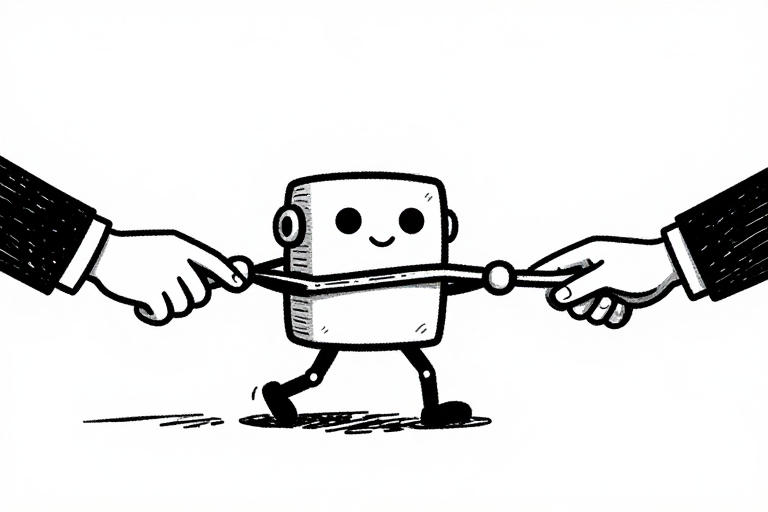
OpenAI just hired the OpenClaw creator
The creator of OpenClaw -- the open-source AI assistant that went from 9k to 145k GitHub stars and caused actual Mac Mini shortages -- has been hired by OpenAI, not Anthropic. The irony is thick: the project was originally called Clawdbot, named after Anthropic's Claude. OpenClaw lets users connect an autonomous AI to WhatsApp, Telegram, and Slack, handling emails, browsing, code, and calendars with a heartbeat system that proactively checks on tasks. Jason Calacanis reportedly said his company offloaded 20 percent of tasks to it in 20 days.
Anthropic don't need it, Google don't need it. Clawdbot will die in the OpenAI 'charity arm' and Peter will quit within 6 months of working for Sam. Only the open source forks will remain.
— Cold_Respond_765649 pts
Get ready for ClosedClaw.
— Emotional_Farmer_24338 pts
You don't need OpenClaw to have a heartbeat script. Literally just ask Claude to build one. Better yet, have Ollama run the heartbeat, because it's usually simple stuff you don't need to burn tokens on.
— Rise-O-Matic14 pts
OpenClaw is wildly overrated IMO
A counterpoint to the hype: a user who ran OpenClaw on a VPS for a week reports extreme disappointment. The persona constantly forgot how to act, skills were never used unless explicitly invoked, and actual tasks failed -- merging Notion pages was a disaster, Slack monitoring missed messages, and the token burn was massive with little to show for it. The thread became a thoughtful debate about when agents add value versus when deterministic orchestration is the right tool.
No it's not. It's amazing to detect degenerates from LinkedIn.
— ugon24 pts
It's a fine idea I guess but I want to hear 10x more about actual use cases. All I see are people crying about the token burn.
— vxxn17 pts
A lot of frustration comes from trying to use agents to replace deterministic orchestration. Slack monitoring and Notion updates are event-driven workflows. The agent layer should handle ambiguity and planning, not replace the plumbing.
— sharmasachin988 pts
Memory architecture is the real bottleneck in multi-agent AI, not prompt engineering
A post arguing that the teams succeeding with AI agents in production have figured out memory architecture, not prompt engineering. Agent coordination needs persistent state, atomic operations, and conflict resolution -- the same foundational thinking that built the modern web. The core problem: agent A does not know what agent B discovered last week. Facts exist in silos. Nobody correlates them. The agent gives a confident wrong answer because its memory is broken.
I designed a cascading documentation structure with a seed document that teaches stateless agents how to deploy it. All agents log 'What, where, why' into a dated, shared devlog.md. Documentation takes up no less than 15 percent of total LOC.
— myeleventhreddit3 pts
Memory is the biggest tarpit there is in agents.
— penguinzb13 pts
Claude Sonnet 4.6 just dropped, and the benchmarks are impressive
The biggest post of the day across all subreddits. Sonnet 4.6 approaches Opus-level intelligence at a fraction of the cost, with human-level computer use capability, a 1M token context window in beta, and upgrades across coding, agent planning, and design tasks. The economics are notable -- near-Opus performance at Sonnet pricing opens entirely new use cases that were not cost-effective before. Now available on all platforms and upgraded as the default free tier model.
The elephant in the room is that the performance difference between Opus 4.6 and GPT-5.2 is negligible while the latter costs 10x less. I love Claude, but something will have to change or Anthropic will rightfully lose users. I'm glad we have competition -- no matter who wins, the users win.
— cowwoc107 pts
Every few weeks I keep hearing about '1M context length in beta' but I never seem to actually get it.
— SatoshiNotMe34 pts
Claude Code leaked me someone else's response (I believe)
A user reports that after leaving a Claude Code session open overnight, it responded with content that appeared to belong to a completely different session -- referencing a project called 'Exodus' that the user had never worked on. When questioned, Claude burned 10K tokens trying to explain before being cancelled. The thread debated whether this was a genuine cross-session leak or training data leakage, with most experienced users suggesting it was likely the latter rather than an actual privacy breach.
That's my response! Give it back!
— shutupandshave60 pts
Most likely it was training data, not someone else's response. I have had local models spew out garbage and other people's work when parameters are wrong. Either way, you shouldn't be seeing it.
— Narrow-Belt-503018 pts
It's a bug. I had a long drive recently and wanted to listen to the outcomes of a large report Claude wrote...
— wifestalksthisuser6 pts
Claude Notifications Plugin: one-command install
A popular Claude Code plugin for desktop notifications hit 250 GitHub stars and now offers one-command installation. The plugin adds desktop notifications with click-to-focus functionality, per-status control so you can get only 'Question' alerts while muting 'Task Complete,' custom sounds, terminal bell indicators, and webhook support including ntfy.sh for mobile alerts. The thread debated whether native hooks plus ntfy.sh are sufficient, with the author arguing the plugin adds significant quality-of-life features out of the box.
You have hooks and you have ntfy.sh, you literally don't need anything else.
— spideyy_nerd5 pts
Fair point for mobile alerts. But this plugin adds desktop notifications with click-to-focus, per-status control, custom sounds, terminal bell, and more -- all out of the box, no scripting needed.
— IlyaZelen6 pts
How did you get your first 50 users for your SaaS?
The most active thread of the day with 169 comments. The question is simple but the answers reveal a clear pattern: the first 50 users almost never come from paid ads or marketing strategy. What works is one-by-one direct outreach -- LinkedIn messages, Reddit posts, showing up in communities where your ideal customer is already complaining about the exact problem you solve. Multiple founders confirmed that being genuinely helpful in niche threads generates warm inbound leads when people check your profile afterward.
One by one, step by step. Direct email, direct LinkedIn message, post on Reddit, post on X. Do a mix, not only one will work.
— Bob_Duncan29 pts
First 50 users almost never come from paid ads. Solve your own problem publicly. Be helpful in communities. Direct outreach to people who need it -- not cold email blasts.
— Much_Pomegranate627212 pts
First 50 rarely come from blasting channels. It's usually from showing up where your ICP is already complaining and having real conversations. High intent threads beat cold volume.
— Intrepid-Standard4327 pts
AI is creating a huge skill gap
A ten-year developer observes that AI has not made coding easier for everyone as expected. Instead, it has created a widening skill gap between two groups. The first treats AI like a smart teammate -- they understand what it builds, know why it works, and feel comfortable changing it or saying no. The second treats it like a magic box -- drop in a prompt, take what comes out, ship it, panic when it breaks. The gap is accelerating because AI amplifies existing ability rather than replacing the need for it.
AI didn't flatten the skill curve, it amplified it. The people who understand fundamentals use it as leverage, not a crutch. It's less 'AI writes code' and more 'AI exposes who actually knows how systems work.'
— Salty-Elephant-743549 pts
AI is shifting where the skill lives. Typing syntax is no longer the most desired skill -- it has shifted to system design and debugging.
— Not_Me_11211 pts
Stop Creating More SaaS
A provocative post arguing the market does not need another AI note-taking app, another all-in-one productivity tool, or another ChatGPT wrapper with a slightly different landing page. SaaS has become the default path -- learn to code or prompt, ship in two weeks, post a revenue screenshot, repeat. But AI making building easier just means more average stuff ships faster. It does not magically create demand. The top comment dryly noted: 'This is the SaaS forum, dawg.'
This is the SaaS forum dawg.
— TheArchitect_782 pts
You are right that most people don't have imagination and build useless stuff without proper market research -- but there are still a gazillion opportunities out there for SaaS.
— reward7216 pts
The wins didn't come from creating more, but from going deeper on a painful niche and solving it properly. Volume isn't the issue, lack of focus is.
— Front_Bodybuilder1054 pts
Simple SEO things that are actually working right now in 2026
A practitioner's guide cutting through the noise about SEO being dead. The actionable wins: update old content ranking between positions 8 and 20 in Google Search Console by adding new information, fixing outdated stats, and adding FAQ sections -- this alone can push pages to page one. Show a real author with a bio and LinkedIn link, since both search engines and AI systems prefer content tied to real people. Create highly targeted landing pages for granular keywords rather than competing on broad terms.
Creating highly targeted landing pages and targeting granular keywords can also help. The more granular your SEO focus, the more citations you will get on AI and Google.
— bookason2 pts
Updating content regularly.
— madhuforcontent5 pts
What is the best SEO tool that also optimizes for AI brand mentions?
As SEO shifts toward getting mentioned in Google AI Overviews, ChatGPT, and Gemini, marketers are searching for tools that optimize for both traditional search and AI citations. The thread revealed that legacy tools like SEMRush and Ahrefs have added AI mention tracking, but newer entrants focus specifically on discovering questions customers ask AI assistants and auto-publishing content designed to earn citations. The underlying shift: SEO is no longer just about ranking on a results page -- it is about being the answer an AI model retrieves.
SEMRush and Ahrefs do have AI mention tracking now. But for AI-first tools, Frizerlly discovers questions customers are already asking on ChatGPT/Gemini and auto-publishes content answering them to help you get cited.
— Sweet_Football_5526 pts
The shift is real -- you need to think about being cited by AI, not just ranked by Google.
— caramelhawk4 pts
Is Google losing dominance to social search platforms?
A discussion about the shift from Google to Instagram, TikTok, and YouTube for search. The consensus: the shift is real but overblown. Google still dominates intent-based searches where people are ready to buy something specific. Social platforms excel at discovery and inspiration, not conversion. The smart play is matching your funnel stage to the right platform -- social for awareness, Google for capturing ready buyers -- rather than betting on one channel replacing the other.
The shift is real but overblown. Google still owns intent-based searches. Social platforms excel at discovery, not conversion. Smart businesses use both: social for awareness, Google for ready buyers.
— fredkasongo_biz5 pts
Google isn't losing dominance yet, but social platforms are taking over product and trend searches. Social search is becoming a complement, not a replacement.
— Few-Solution-53742 pts

Bergson on deja vu: memory forms at the same time as experience
The top philosophy post explores Henri Bergson's theory that deja vu reveals something fundamental about how memory works. For Bergson, the sensation is not a glitch or a false memory -- it is the conscious perception of memory forming simultaneously with experience itself. We feel we have lived the moment before because we are sensing the memory of the present being created at the exact instant we experience it. The theory challenges the common assumption that memory is always retrospective, suggesting instead that perception and memory are parallel processes.
A deja vu is usually a glitch in the Matrix. It happens when they change something.
— rattatally5 pts
I've always suspected it's connected in some way to mirror neurons.
— almostsweet4 pts
Wait, so it's about how we sense the memory and not about how we memorize. Or is it the same thing?
— philolover73 pts
The origin of values: are they universal or culturally constructed?
Christian Michel, a journalist and essayist who teaches economics at City Lit and organizes the cafe philo at the French Institute in London, presented a talk exploring the metaphysical origins of values. The central question: can we identify criteria for universal values, or are all values inevitably constrained by culture and social conditioning? The discussion engaged with whether values emerge from human nature, divine command, rational consensus, or social evolution -- a question that has divided moral philosophy since the ancient Greeks.
What is the outcome?
— samotest3 pts
The talk explores metaphysical origins, the criteria that might identify values, and whether they can be universal or are inevitably constrained by culture and social conditioning.
— _CriticalThinking2 pts
Fasting and transcendence: the link between hunger and spiritual experience
A philosophical inquiry into why physical deprivation -- particularly fasting -- intensifies feelings of spirituality and meaning across religious traditions. The post frames fasting through four lenses: a tool for self-discipline, a method of empathy for the poor, a psychological trigger for transcendence, or a social ritual that strengthens group identity. One commenter offered a practical perspective, noting they fast regularly to realign volition because the body co-opts the voice of thought and gives itself undue influence over choices.
I regularly fast to realign my volition because I notice my body co-opts the voice of my thoughts and gives itself undue influence over my choices. I have had interesting experiences meditating during fasting as a result.
— ottereckhart2 pts
No Product Hunt data available
Product Hunt was unreachable at time of publication
NVIDIA's Insane AI Found The Math Of Reality
Nvidia researchers developed an AI system that can discover mathematical equations governing physical phenomena from raw observational data. The paper demonstrates that neural networks can autonomously identify underlying physical laws without being told what to look for -- essentially finding the math of reality from scratch.