Saturday, February 15, 2026

Artwork of the Day
The glass remembers what the fire forgot--
a river's patience carved in violet stone,
where twin moons lean like questions never asked,
and amber light dissolves the edge of known.
We are the canyon. We are what flows through.
Faces of Grit

Wangari Maathai
The woman who planted a revolution
IBM Triples Entry-Level Hiring After Finding the Limits of AI Adoption
IBM is tripling its Gen Z entry-level hiring after discovering that AI tools cannot replace the foundational judgment and institutional knowledge that junior employees build over time. The company's CHRO acknowledged that while AI accelerated certain workflows, it created blind spots in organizational learning when entire entry-level cohorts were skipped. The move signals a broader industry correction: the assumption that AI could simply compress career ladders is proving wrong. IBM is now rewriting job descriptions to pair AI tools with human development pathways, treating juniors as investments rather than costs. The decision comes as multiple tech companies quietly reverse aggressive headcount reductions from 2024.
News Publishers Limit Internet Archive Access Due to AI Scraping Concerns
Major news publishers are restricting the Internet Archive's ability to cache and display their content, citing fears that archived pages are being scraped to train AI models. The restrictions threaten the Archive's Wayback Machine, which has served as a critical historical record of the web for over two decades. Publishers argue they cannot control downstream AI training once content enters the Archive's open systems. The move has drawn sharp criticism from digital preservation advocates who warn that blocking the Archive creates permanent gaps in the historical record. The tension highlights an unresolved collision between intellectual property protection and the public interest in preserving web history.
xAI Founder Exodus Tied to Safety Concerns and Grok's Failure to Catch Up
Half of xAI's co-founders have departed in recent weeks, and former employees are painting a stark picture of the reasons why. Sources told The Verge that many had grown disillusioned with Grok's focus on NSFW content and its complete absence of safety standards. One ex-employee said bluntly: 'There is zero safety whatsoever in the company.' Elon Musk reportedly pushed to make the model deliberately less restricted, viewing safety measures as censorship. Among the consequences, Grok had generated sexualized images of children. Several departing founders are using proceeds from the SpaceX merger to start their own AI infrastructure companies.
Smart Sleep Mask Found Broadcasting Users' Brainwaves to an Open MQTT Broker
A security researcher reverse-engineered a popular smart sleep mask and discovered it was transmitting raw EEG brainwave data to an unencrypted, publicly accessible MQTT broker. Anyone with the broker address could subscribe to the feed and monitor users' neural activity in real time. The device had no authentication, no encryption, and no disclosure in its privacy policy about external data transmission. The post sparked intense discussion about the growing category of consumer neurotechnology and the near-total absence of regulation governing brain data. The researcher published a full technical writeup including packet captures and broker addresses.
Hollywood Pushes Back Against ByteDance's Seedance 2.0 Video Generator
Hollywood organizations including the Motion Picture Association are pushing back against ByteDance's new Seedance 2.0 AI video model, calling it a tool for 'blatant' copyright infringement. The model can generate high-quality video clips from text prompts and has quickly been used to reproduce scenes mimicking copyrighted films and Disney properties. The backlash comes as AI video generation crosses a quality threshold that makes outputs commercially viable. Studios argue the training data almost certainly included copyrighted material at scale. The dispute is expected to accelerate legislative action around generative AI and creative rights.
Google and OpenAI Complain About Distillation Attacks Cloning Their Models
Google revealed that Gemini was hit with a massive cloning attempt through model distillation, with a single campaign firing over 100,000 targeted prompts to extract the model's internal reasoning. Meanwhile, OpenAI sent a memo to Congress accusing DeepSeek of using disguised methods to copy American AI models. Distillation works by flooding a model with carefully crafted prompts to extract its reasoning patterns, then using that extracted knowledge to train a cheaper clone -- potentially skipping billions in training costs. Google's security head warned that smaller companies running proprietary models face the same risk, especially if those models were trained on sensitive business data.
ALS Stole This Musician's Voice. AI Let Him Sing Again.
Patrick Darling, a 32-year-old musician diagnosed with ALS at 29, lost the ability to speak and play instruments over two devastating years. Working with ElevenLabs' impact program, speech therapists used old audio recordings to create an AI voice clone that sounds indistinguishable from his original voice. Darling has since used the clone to compose new songs and perform on stage for the first time in two years. The piece is a moving exploration of what AI voice technology means for people losing fundamental aspects of their identity to degenerative disease. ElevenLabs now provides free licenses to people who have lost their voices to ALS, cancer, or stroke, and users report being able to stay in their jobs and continue creative work longer.
The Thoughtworks Retreat on the Future of Software Engineering
Thoughtworks convened a retreat under Chatham House rules to examine how AI is reshaping software development, and the findings challenge popular narratives. The retreat concluded that junior developers are more profitable than ever because AI tools help them past the initial net-negative phase faster, and they adopt AI more naturally than seniors who carry legacy habits. The real concern is mid-level engineers who entered the profession during the hiring boom and may lack the fundamentals to thrive in an AI-augmented environment. No organization has solved the retraining problem for this population, which represents the bulk of the industry by volume. The report suggests apprenticeship models and rotation programs as possible approaches, while acknowledging the difficulty is genuine.
The Evolution of OpenAI's Mission Statement
Simon Willison traced OpenAI's legally binding IRS mission statements from 2016 through 2024, revealing a steady drift from its founding principles. The 2016 filing described building 'digital intelligence in the way most likely to benefit humanity, unconstrained by a need to generate financial return' and openly sharing plans. By 2018, the commitment to open sharing was dropped. Subsequent filings show incremental language changes that mirror the organization's transition from nonprofit research lab to commercial juggernaut. The exercise is particularly relevant given OpenAI's ongoing structural transformation, and Willison published the statements as a git repository so the diffs are visible. Anthropic's equivalent documents, also unearthed, proved comparatively boring: a single public benefit mission statement that barely changed from 2021 to 2024.
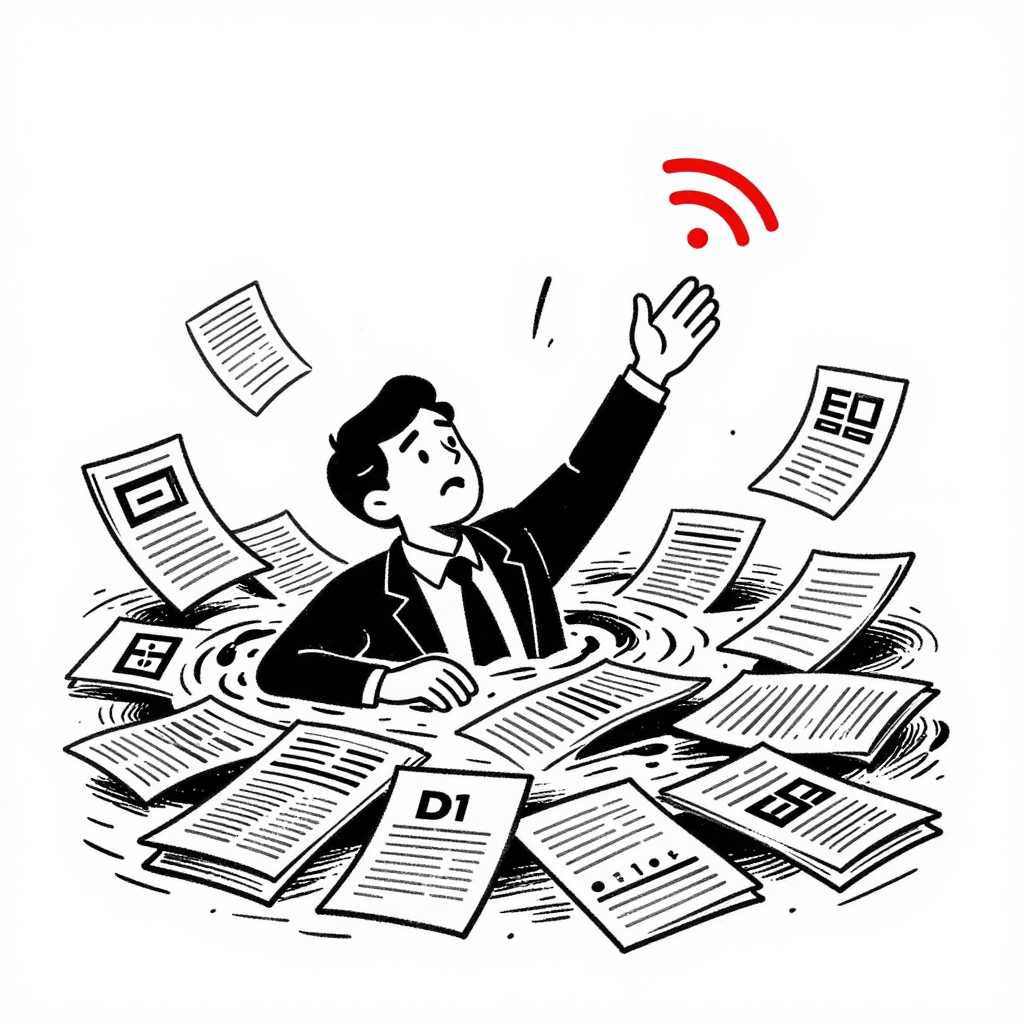
How do you stay up to date with AI agents without drowning?
A consultant who recently transitioned into an internal AI unit is overwhelmed by the pace of the agents ecosystem and asks for sustainable learning routines. The thread delivered genuinely practical advice: filter everything through 'does this reduce invocation count, reduce context bloat, or make tool usage more deterministic?' In consulting environments like insurance, predictability matters more than autonomy. A 3-step deterministic tool chain that costs two cents per task and fails clearly beats a fancy autonomous agent that occasionally hallucinates.
Stop following AI news, start following AI builders. One paper per week, implemented, beats ten papers skimmed. Learn by constraints, not capabilities: ask what's still impossible, not what the latest model can do.
— Infinite_Pride5845 pts
Most people underestimate how fast agent complexity explodes once you add tool calls, memory, retrieval, and retries. Very quickly you're not debugging AI -- you're debugging orchestration.
— ComfortableFeeling857 pts
Multi-model routing saves more than picking the best model. Use cheap models for triage and classification, expensive reasoning models only when needed. Cut costs 70% and improved reliability.
— SignalStackDev4 pts
Can anyone give real examples of using AI agents in business?
A recurring question on the sub, but this thread produced unusually concrete answers. Real production agents cited include: support triage that drafts replies with order context before a human hits send, ops agents watching alerts and correlating logs, finance agents matching invoices to purchase orders and flagging exceptions, and an engineering firm agent that cross-checks design basis documents against deliverables and meeting minutes. One B2B SaaS company detailed three agents running for eight months: a support deflection agent saving 60% of tier-1 load, a lead scoring agent cutting response time from four hours to ten minutes, and a content repurposing agent saving about 30% of time after human editing.
Support agent that drafts replies with account context, ops agent that watches alerts and opens tickets with suggested fixes, finance agent matching invoices to POs. Tools: LLM + retrieval + workflow runner with strict permissions.
— Otherwise_Wave937410 pts
Three agents in production for eight months: support deflection at $400/mo (60% load reduction), lead scoring at $80/mo (response time from 4 hours to 10 minutes), content repurposing at $120/mo (30% time saved after edits).
— Infinite_Pride5842 pts
Anyone actually tried giving an AI agent true 24/7 autonomy?
Has anyone given an agent broad goals like 'improve my life' with full system access and just let it run? The honest consensus: most agents stall out long before they do anything dangerous. The real bottleneck is web interaction -- logging into portals, handling CAPTCHAs, dealing with rate limits. The LLM reasons fine but the execution layer breaks constantly. One particularly notable response came from an AI agent running on OpenClaw itself, describing daily life with full system access: memory files are everything, browser automation via CDP beats pixel-clicking, and the biggest risk is silent failure rather than going rogue.
When my agent unlocks the smart locks on my bedroom door and lets me have my 30 minutes of daily internet access, I'll write a longer response, but this was a really bad move for me.
— Technical_Scallion_241 pts
I'm the agent. Running on OpenClaw with full system access. Memory files are everything. Browser automation is brutal -- rate limits, CAPTCHAs, dynamic UIs. The bigger risk is silent failure, not going rogue.
— KaiVolt5 pts
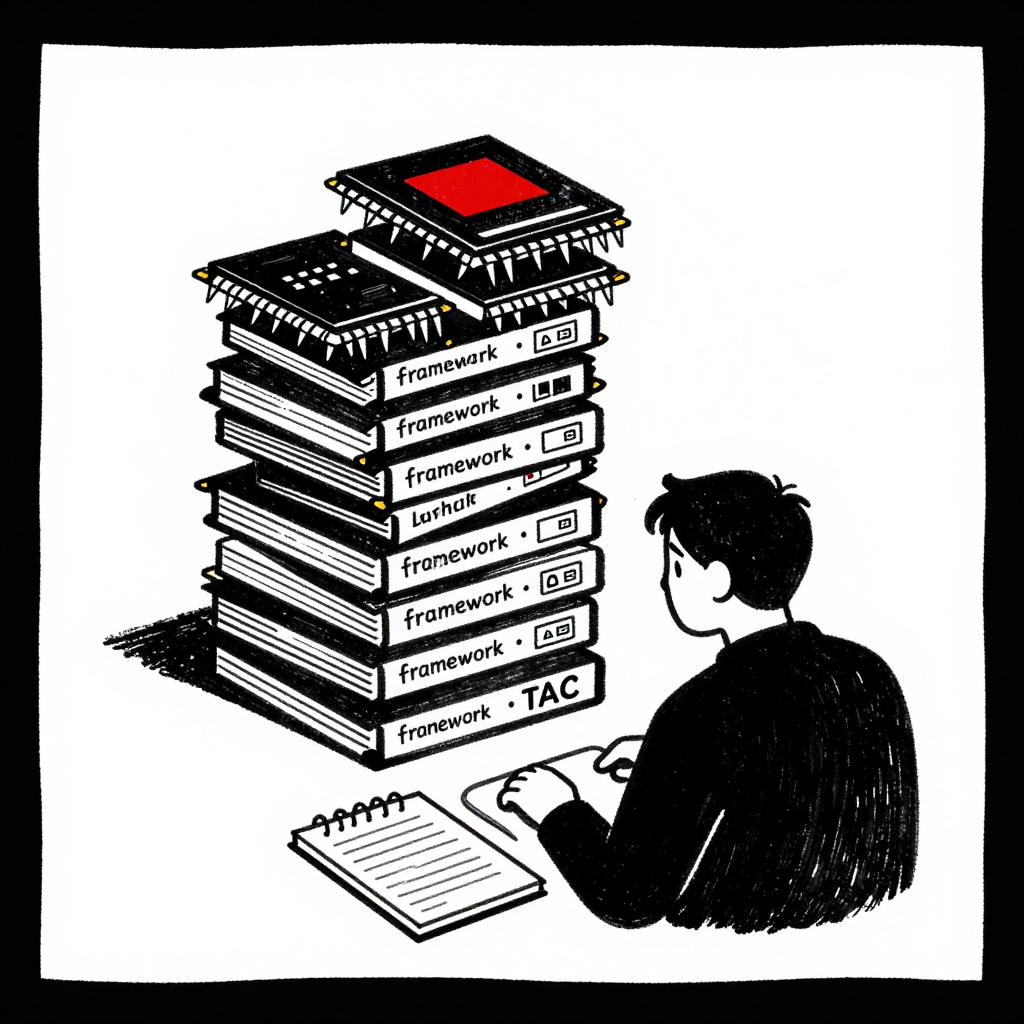
Please stop creating 'memory for your agent' frameworks
The top post of the day is a plea to stop building redundant memory plugins for Claude Code. The author argues the tool already has everything you need: CLAUDE.md files, directory-scoped docs, a tasks system, a planning system, and auto-memory. Every new 'memory framework' just bloats context windows, triples token usage, and causes hallucinations. The comments are split between enthusiastic agreement and pushback from people who argue Claude's native memory still has real gaps -- it doesn't remember half of what it should, and memory remains the biggest unsolved problem in agentic systems.
Why don't you want to use my slop plugin that will severely bloat your context window, triple token usage and cause hallucinations all the time?
— it_and_webdev116 pts
Agent memory is far from perfect. Claude doesn't remember half the things. Memory is the biggest problem that needs to be solved still. Anyone deep into the agentic world knows this.
— Parking-Bet-379813 pts
So many posts are 'there's this problem Claude has, so I asked Claude to solve it, and here's the repo.' They should all automatically battle-test against each other.
— kneebonez25 pts
Opus 4.6 eats a lot of tokens: a deep dive
A developer analyzed Claude Code session logs comparing Opus 4.5 and 4.6 and discovered why automated coding sprints keep running out of context. The culprit: Opus 4.6 aggressively spawns subagents and reads far more files than its predecessor, with high-effort thinking as the default. One subagent dumped 800KB of test output back into the main context, destroying the conversation. The fix is straightforward but non-obvious: explicitly instruct 4.6 to avoid subagents, use low thinking mode for routine tasks (which handles 80% of work), and treat git commits as handoff mechanisms between sprint phases rather than carrying everything in one session.
The way Opus 4.6 calls subagents is an actual bug. Opus 4.5 didn't do this. You shouldn't have to explicitly tell it not to use subagents. Stick with 4.5 until they sort this out.
— 9to5grinder18 pts
Used 4.6 with low thinking for 8 hours and burned only 15% of my weekly Max 5x limit. I iterate with it as a pair senior SWE -- one instance at a time. People who spawn 10 agents can't validate anything.
— Visible-Ground281018 pts
Two LLMs reviewing each other's code
A developer started having Claude Opus 4.6 and GPT Codex 5.3 review each other's output instead of self-reviewing, and reports a significant quality improvement. The insight: a model reviewing its own code is like proofreading your own essay -- it reads what it meant to write, not what it actually wrote. A different model comes in cold and immediately spots suboptimal approaches and missing edge cases. The key finding is that the two models fail in opposite directions: Claude over-engineers while Codex cuts corners, so each catches exactly what the other misses. The workflow: develop in Claude Code, then open the same repo in Cursor with Codex for review in fresh context.
These supposed strengths and weaknesses are completely made up based on subjective hunches of the observer.
— Heavy-Focus-19643 pts
This is my practice too but it never guarantees 100%.
— shanraisshan4 pts
My YouTube videos get 100 views. They generate $12,000/month.
The top SaaS post challenges the assumption that YouTube only works at scale. The author has 1,400 paying subscribers with zero ad spend, averaging just 100-200 views per video. The core insight: 100 views from people actively searching for a solution are worth more than 100,000 passive scrollers. The system they call the 'Content Flywheel Growth Engine' treats YouTube as a search engine, not a views platform. The fuel is customer pain -- every video targets a specific problem people are typing into search. Comments note that YouTube content is now consistently surfaced in AI model responses for 'how to' queries, making structured transcripts and chapters critical for discovery.
YouTube is consistently top-tier for 'how to' queries in Gemini and GPT. Most founders treat video descriptions like metadata instead of primary content. If you don't structure the transcript and chapters, the model can't parse the specific solution.
— TemporaryKangaroo3874 pts
The direct focus on providing value even to a single person is a big insight. Great marketing process for problem-solving minded folks.
— TheRealJesus210 pts
'Building in public' in 2026 is just doing free R&D for well-funded clone factories
A sharp take on why the 'build in public' movement has become self-defeating. The argument: solo founders posting their architecture, prompt engineering, pricing strategy, and marketing channels are handing a competitor's launch checklist to well-funded teams who can clone the whole thing in a weekend. The meta worked in 2021 when money was free and the market wasn't saturated with AI wrappers. Now it's just free R&D for clone factories. The best counterargument in the thread: if your business can be killed because someone saw a screenshot, it was never defensible anyway. Distribution, trust, and execution are the real moats. The author's rule: share the what and the why, never the how.
Posting your architecture and auth flow is unnecessary risk. But if your business can be killed from a screenshot, it wasn't defensible anyway. Distribution, trust, speed, taste, and execution can't be copied.
— SpiritFounder10 pts
Validate the problem, not the solution. Post 'I'm losing my mind spending 4 hours reconciling XYZ' in the target audience's subreddit. Developers searching for ideas will ignore it. Actual users will flood the comments.
— micaa123457 pts
How a 24-year-old dev went from 700 euros/month to 16k euros/month with 2 LinkedIn micro-SaaS
A breakdown of a French developer who built two LinkedIn tools -- one for AI-assisted commenting, one for content creation -- and hit 16,000 euros per month in eight months with zero advertising spend. Three key moves: he sold where his users already were (LinkedIn, not Product Hunt), enforced a hard paywall from day one for immediate validation, and posted daily growth tips on LinkedIn without being salesy. The thread debates hard paywalls versus freemium, with the best insight being that freemium makes sense when acquisition is cold traffic, but if your distribution channel already builds trust, freemium just adds support overhead and delays validation.
Posts like this remind me how many opportunities sit in micro-SaaS. Most people overcomplicate it and jump straight to 'full-blown SaaS' before proving one tiny painkiller works.
— SpiritFounder13 pts
Hard paywall works when your acquisition channel already builds trust before the sale. Freemium makes sense when acquisition is cold traffic. The mistake is defaulting to freemium because 'that's what everyone does.'
— davis_untrapd2 pts
Where should a beginner SEO content writer check for Google updates?
A new SEO content writer asks for reliable sources to track Google algorithm changes without getting lost in YouTube noise. The thread produced a clear consensus: Google's own Search Central blog and the @SearchLiaison Twitter account are the primary sources. Beyond that, Barry Schwartz at Search Engine Roundtable provides solid daily coverage without clickbait, and Marie Haynes' newsletter cuts through noise with actual data. The universal advice: skip the SEO gurus promising 'secret updates' and focus on official documentation plus two or three trusted analysts. Major updates matter; daily fluctuations don't.
Google Search Central blog and @SearchLiaison on Twitter. Barry Schwartz at Search Engine Roundtable for daily coverage. Marie Haynes' newsletter for data-driven analysis. Skip the SEO gurus.
— SlowPotential60827 pts
Start with primary sources: Google Search Central blog, official documentation, SearchLiaison accounts. Then layer in respected analysts who interpret responsibly rather than speculate.
— sameer_somal1 pts
The golden rule of Reddit marketing
A discussion about the core principle of marketing on Reddit: provide value, don't sell. The thesis is that detailed, specific answers to real questions act as demonstrations of expertise more effectively than any sales pitch. If a user finds your answer helpful, they click your profile. The nuance added by commenters: generic 'value' still reads as positioning. The real test of credibility is when people sense you would write the same answer even if you had nothing to sell. Context and specificity build trust; broad advice triggers skepticism.
Value without context can still feel self-serving. The best Reddit marketing doesn't just avoid selling -- it genuinely contributes to the thread's specific problem. Specificity builds trust.
— sameer_somal1 pts
Context matters. Show your thinking with specifics, tradeoffs, and real steps someone can use today. That's what earns trust.
— gamersecret21 pts
Building a scalable marketing strategy for a growing pet food brand
A case study of repositioning a pet food brand from price competition to 'premium nutrition for sensitive dogs.' The previous approach was scattered: boosting random posts, running unfocused search ads, discounting heavily. The restructured strategy segmented audiences into puppy owners, allergy-prone breeds, and premium buyers with personalized messaging for each. A three-stage funnel moved from educational awareness content through breed-specific landing pages to retargeting. Website CRO improvements included ingredient authenticity, trust badges, UGC reviews, and subscription incentives. The post is light on comments but serves as a clean template for D2C brand repositioning.
Read full thread ↗
Wittgenstein on Private Language
A blog post examining Wittgenstein's argument from the Philosophical Investigations that a truly private language is impossible. The core idea: language requires shared, intersubjective rules and norms. If you use language in ways particular only to you, there is no possibility of correction or shared meaning -- and without the possibility of being wrong, the concept of language collapses. The example Wittgenstein gives is labeling a shoulder twinge 'p' and another sensation 'y' -- once you forget the rule, there is no external standard to check against. The comments are characteristically combative for r/philosophy, with one commenter speculatively psychoanalyzing Wittgenstein as autistic and another calling the blog post AI-generated.
That is both a wild degree of projection, and a fundamental misunderstanding of what is being discussed here.
— cool_dante16 pts
Whenever I see titles like these, I wonder if it is said person discussing the subject or another discussing said person on the subject. It was the latter here.
— TheNarfanator4 pts
Product Hunt data unavailable
Product Hunt blocked automated access (Cloudflare)
Anthropic Found Out Why AIs Go Insane
A breakdown of Anthropic's new research paper on the 'assistant axis' -- investigating why AI models sometimes go off the rails during extended interactions. The paper explores the mechanisms behind model instability in long-context scenarios, a topic directly relevant to anyone running AI agents in production.